Trenching Services in McDonough for Drain, Downspout and Utility Lines
McDonough Drainage connects homeowners with a vetted local contractor for trenching services in McDonough, Stockbridge and the rest of Henry County: narrow cuts across a residential lot that carry a french drain, a buried downspout line, conduit to a garage or shed, or a water line out to a barn or garden hydrant. A trench is the cheapest way to put a line underground wherever open lawn separates where it starts from where it needs to end up.
Most residential trenching here is about water. The county sits on Cecil red clay and the metro averages roughly 52 inches of rain a year, so the lines that carry roof and yard runoff off a lot are the trenches homeowners ask about first. Utility trenching follows the same steps with different depth rules, which are laid out lower on this page.
What Trenching Costs per Foot in Henry County
Residential trenching costs about $5 to $12 per linear foot for the digging alone, according to HomeGuide's 2026 national cost data, and the purpose of the trench moves the number more than its length does.
| Trench purpose | Typical range | What it covers |
|---|---|---|
| Digging only, any purpose | $5 to $12 per ft | A 100 ft trench runs about $500 to $1,200 |
| Electrical line trench | $6 to $14 per ft | Trench for an underground electrical run |
| Drainage system trench | $10 to $30 per ft | Yard drain and buried downspout runs |
| Gas line trench | $12 to $25 per ft | Gas work stays with a licensed plumber or the utility |
| Water line trench | $30 to $50 per ft | Service lines and runs to a yard hydrant |
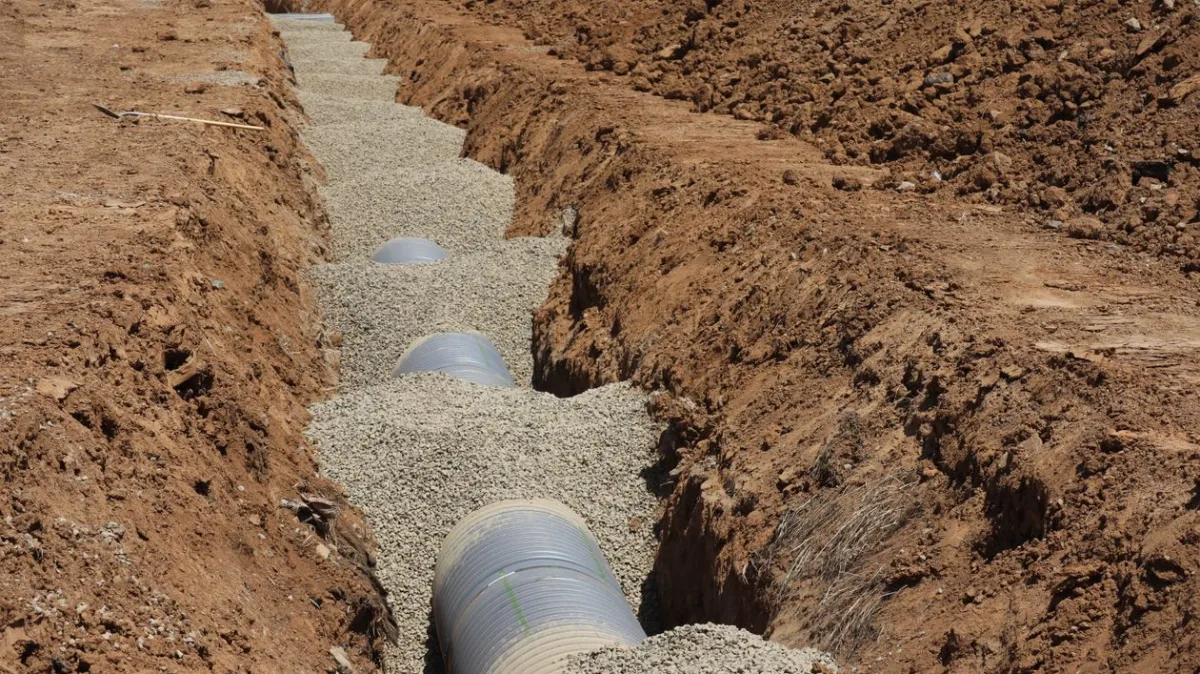
| Exterior french drain, Georgia | $25 to $40 per ft | Trench, fabric, stone and perforated pipe |
Sources: HomeGuide trenching costs(national, 2026); Georgia french drain range from Bucktown Grading & Construction.
Expect Henry County jobs to land toward the top of each band. Red clay loads heavy, packs the trencher chain when it's wet and won't crumble back into the cut, so backfill and cleanup take longer than in sandy ground. Obstacles cost more than distance: a run that has to pass a driveway, thread between oak roots or dodge an irrigation manifold prices higher per foot than a straight shot across open grass.
When a Lot Needs a Trench
A french drain or the solid pipe leaving a catch basin needs a trench that keeps falling toward its outlet. On a long run the outlet elevation, not the yard, decides how deep the far end gets.
Roof water dumped at the corners of a house soaks the clay right against the foundation. A buried line carries it past the beds to a daylight point or a pop-up emitter in the lawn.
Power for a detached workshop, a gate opener or yard lighting goes in a trench deep enough to meet the electrical code's cover rules for that wiring method.
A line to a barn, a garden hydrant or an irrigation zone runs in its own trench, typically priced with the pipe because the plumber and the digging are one job.
Georgia 811 Comes Before the First Cut
Anyone digging in Georgia has to contact Georgia 811 at least three business days before work starts, by dialing 811 or filing online, and the request is free. The ticket goes out to the member utilities, seven on an average request, which send locators to paint or flag their buried lines. Digging can begin once every utility has responded on the ticket.
Inside 18 inches of either side of a marked line, the state's tolerance zone, the digging has to be done by hand, by vacuum excavation or with another soft method rather than a machine. Georgia 811 logs close to 1,600 reported line strikes a month, and its own guidance warns that small weekend projects hit lines too. Details are on the Georgia 811 dig law page.
Recent project from our featured contractor
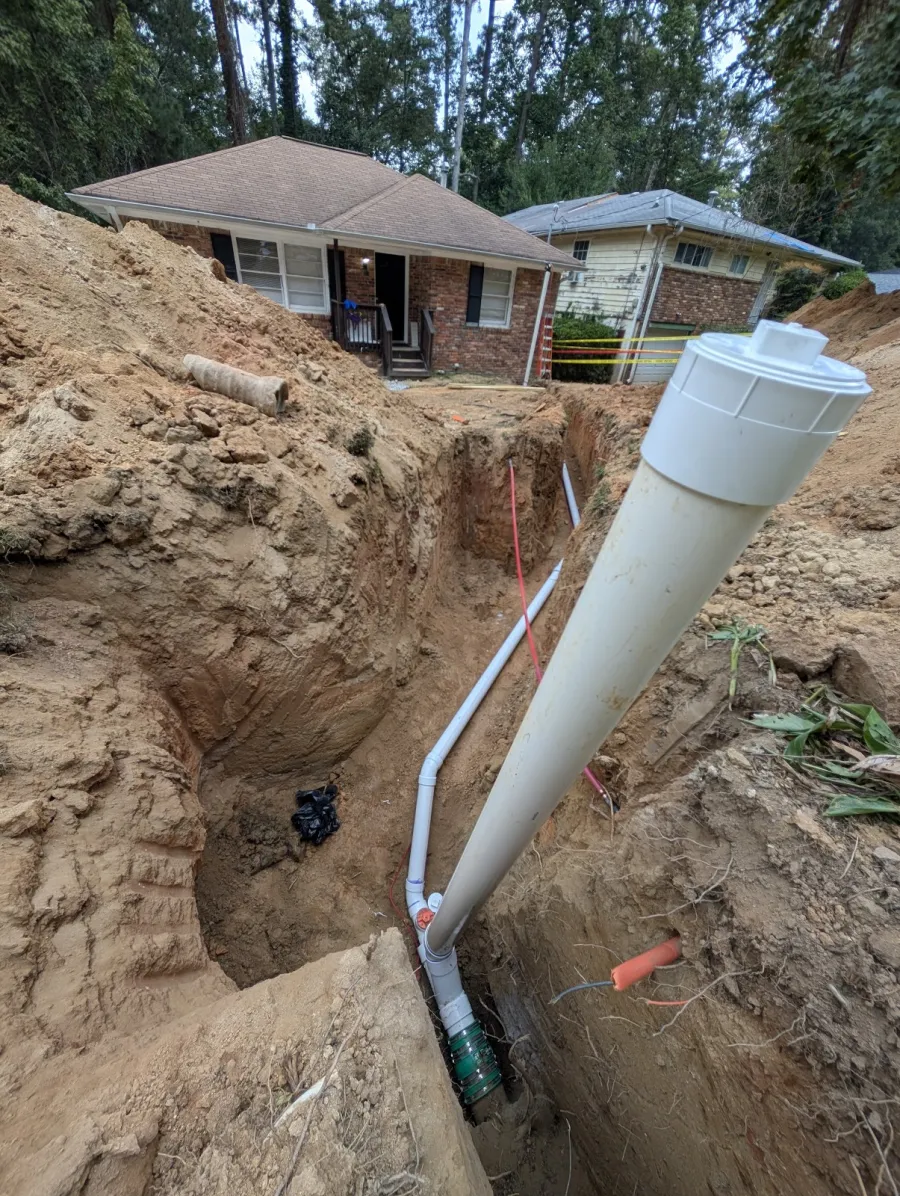
This is our featured contractor's own photo from a recent job: a clean, deep trench beside a brick home, with the pipe run laid along the bottom.
A capped cleanout comes up to the surface so the line can be flushed later without digging it back up.
In a Google review, Charlie F. wrote that [our contractor] “came out to my house within a day and completed trenching, grading, and concrete retaining wall removal in just 2 days.”
How Deep the Trench Goes for Each Kind of Line
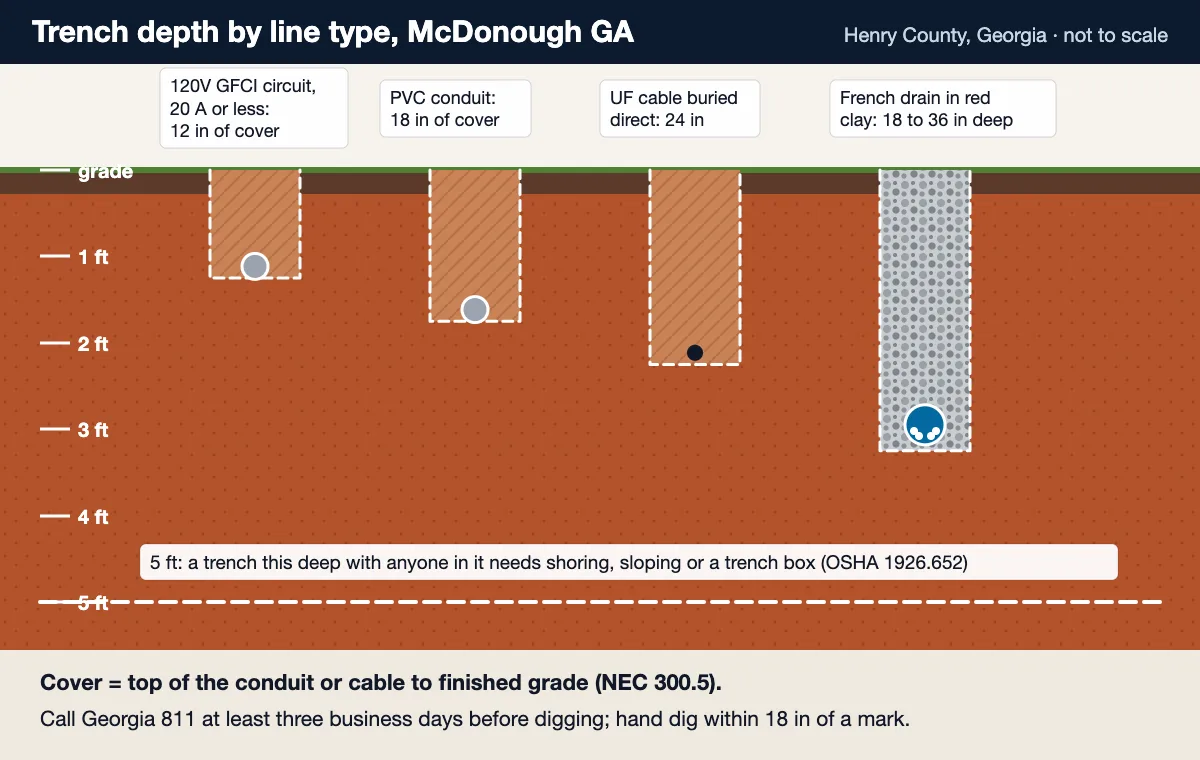
Depth depends on what goes in the trench. Georgia's electrical code is the National Electrical Code with state amendments, and its burial table (NEC 300.5) calls for 18 inches of cover over PVC conduit, 24 inches over UF cable buried without conduit, and 12 inches for a residential 120-volt circuit of 20 amps or less on GFCI protection. Cover is measured from the top of the conduit to finished grade, so the trench itself is cut a little deeper than the number.
Drain lines follow a different rule. A french drain in Henry County clay usually runs 18 to 36 inches deep so the stone sits where it can collect water, and the bottom of the trench has to keep falling toward the outlet the whole way. Downspout lines can stay shallower because they only need enough depth to hold their slope and stay clear of mower blades and aeration tines.
At 5 feet, the rules change for anyone standing in the trench. Federal OSHA standard 1926.652 requires shoring, sloping or a trench box for workers in an excavation that deep, and a competent person has to check shallower cuts for signs of a cave-in. Residential drain and utility trenches rarely get near that depth, which is one reason narrow machine trenches are preferred over wide open pits.
How a Residential Trench Is Dug in Red Clay
- The route is walked and marked in white paint, the color Georgia 811 reserves for proposed digging, and the locate ticket is filed.
- Sod along the route is cut in strips and rolled aside so it can go back down instead of being buried under spoil.
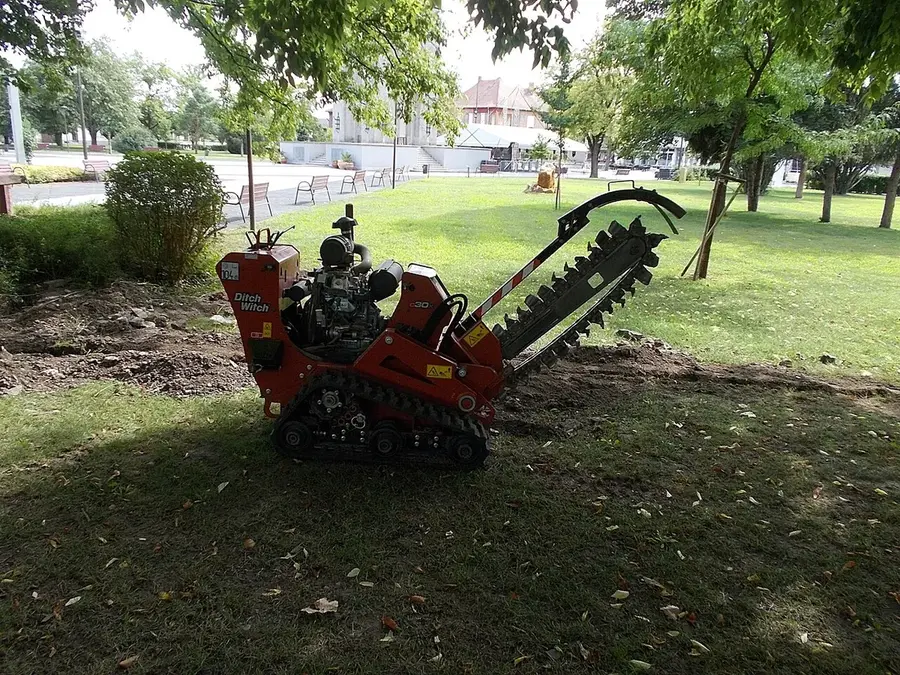
- A walk-behind trencher cuts narrow utility runs; a mini excavator handles wider drain trenches. The tolerance zone around each marked line is opened by hand.
- Drain trenches are checked for fall with a level or laser before any pipe goes in, because fixing a belly later means digging it all up again.
- The line is bedded and laid. Where a permit inspection applies, the inspector sees it before anything is covered.
- Clay goes back in thin layers, each one tamped, with a slight crown left on top for settling, then the sod is relaid and watered.
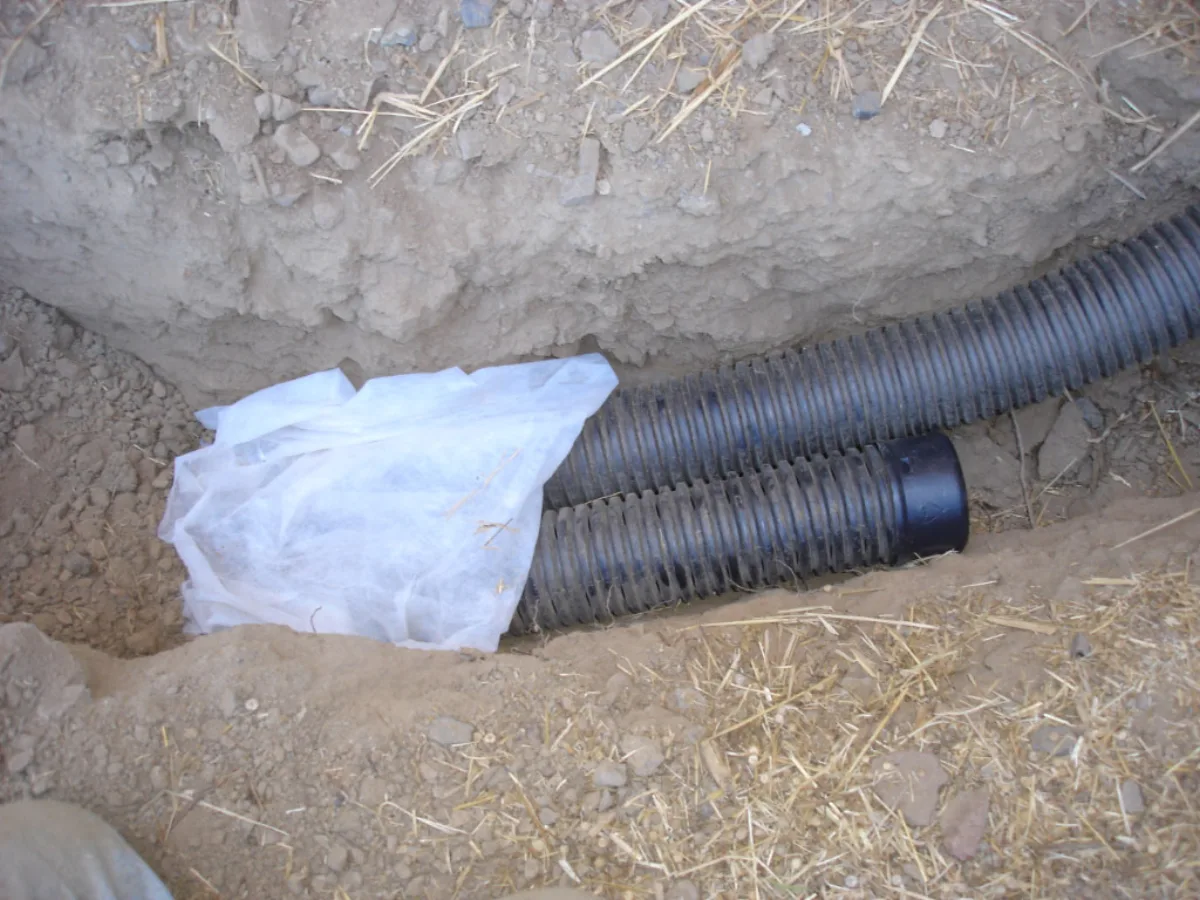
Timing matters with Cecil clay. From late summer into fall the ground is firm and the trench walls stand up on their own; after a week of spring rain the same clay turns to paste, clogs the machine and takes days to settle once it's back in the ground.