What Yard Grading in McDonough Fixes
McDonough Drainage connects homeowners with a vetted local contractor for yard grading in McDonough and across Henry County: reshaping the soil around a house so it falls away from the foundation, and cutting broad, shallow swales that carry rainwater to a safe outlet. Regrading is often the least expensive drainage fix on a lot because it moves soil rather than burying stone and pipe.
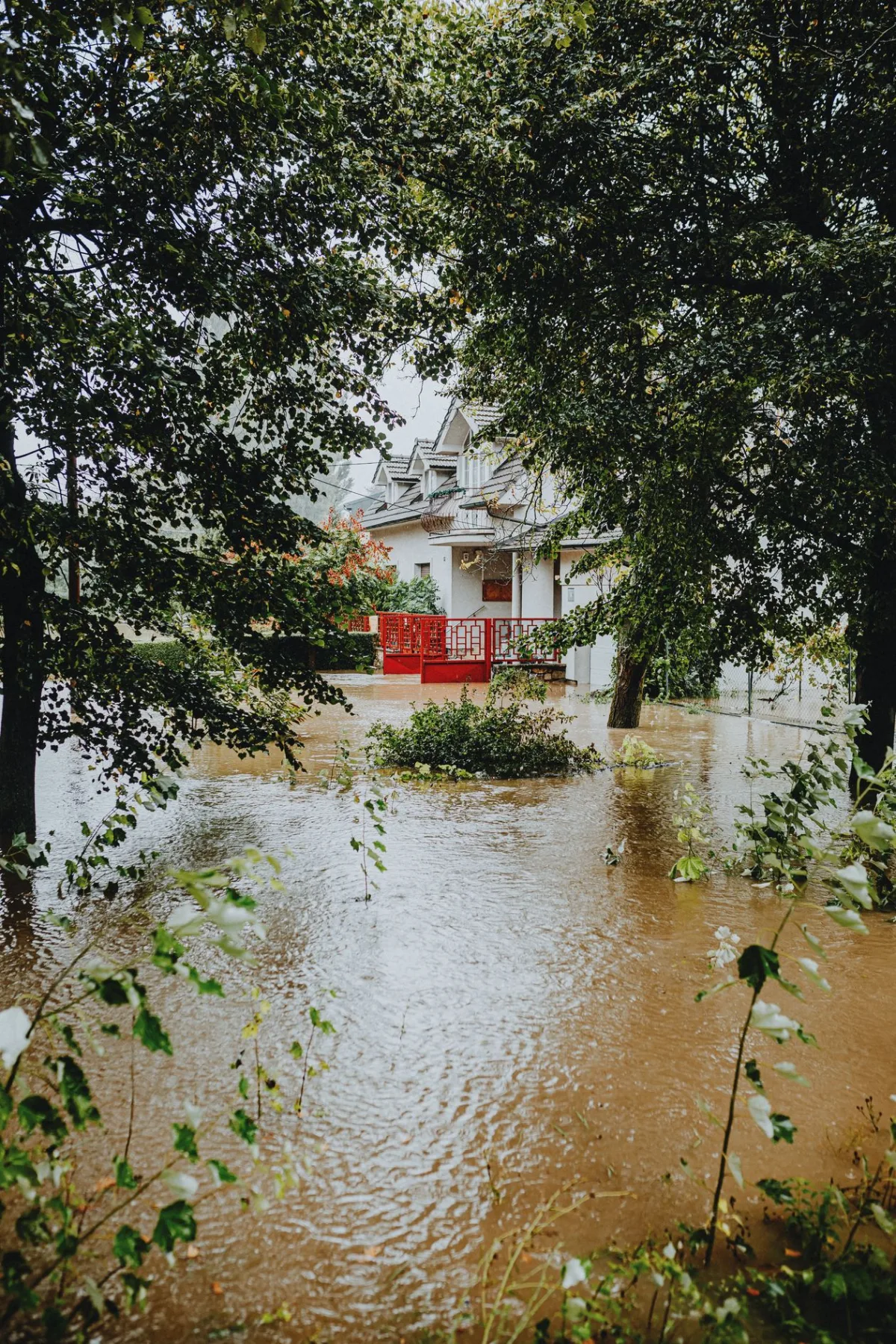
You likely need it if water stands against the foundation after a storm, the lawn visibly tilts toward the house, a patio or walk pitches back toward the wall, or a side yard has sunk into a trough that holds water for days. Each of those is a slope problem first, and fixing the slope is what makes any drain added later work properly.
What Regrading a Yard Costs
Regrading around an entire house typically costs $1,000 to $3,000, and fixing a single side runs $500 to $1,000, based on HomeGuide's 2026 national figures.
| Grading job | Typical cost |
|---|---|
| Regrade one side of the foundation | $500 to $1,000 |
| Regrade around the entire house | $1,000 to $3,000 |
| Regrade a full backyard | $1,000 to $5,000 |
| Finish grading (top 1 to 3 inches) | $0.40 to $1 per sq ft |
| Rough grading (removing slope, contouring) | $1 to $2 per sq ft |
Source: HomeGuide, cost to level or regrade a yard (national, 2026).
Three things push a Henry County quote up or down. The first is how much fill has to be trucked in, since raising a low side by several inches across a long wall adds up to real tonnage. The second is access: a fenced backyard behind a narrow gate means a compact track loader or hand work instead of a full-size machine. The third is what sits on the slope already, such as beds, a patio edge or an AC pad that has to be worked around or reset.
The Slope Rule Behind Proper Yard Grading
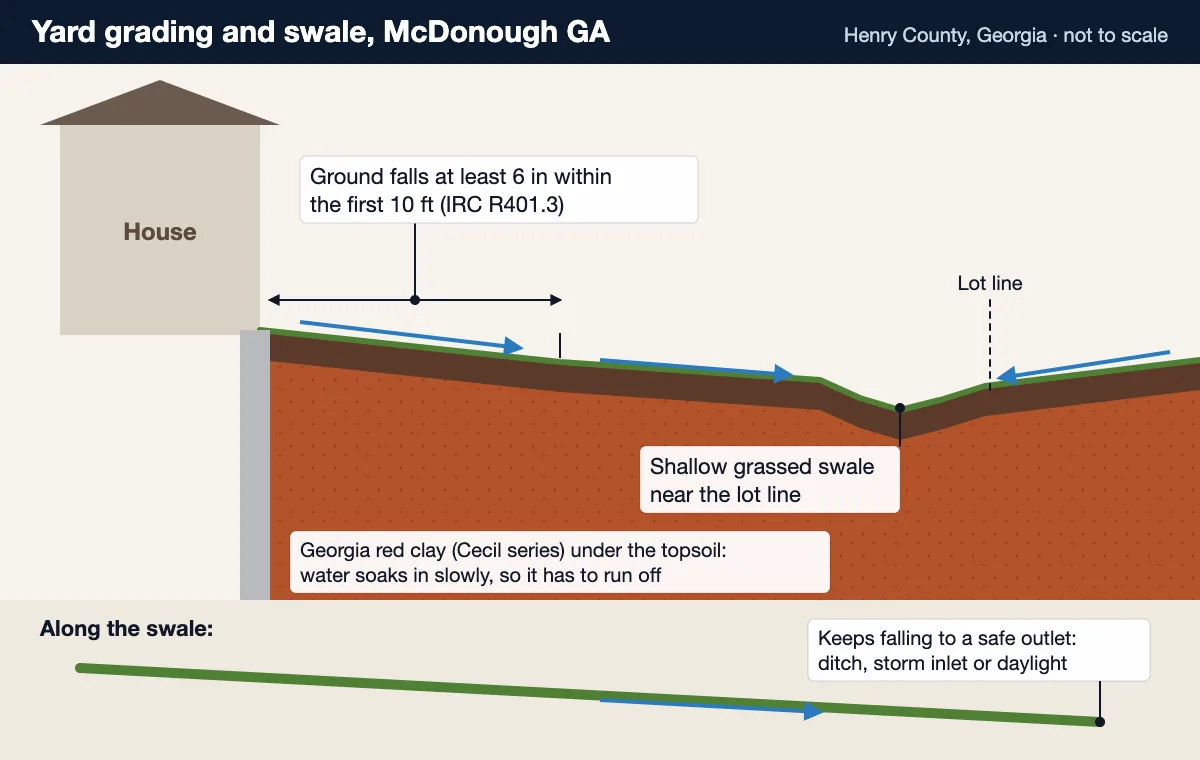
The ground should drop at least 6 inches within the first 10 feet out from a foundation wall. That is Section R401.3 of the International Residential Code, which Georgia adopts with state amendments as its one- and two-family dwelling code. Paved surfaces within those 10 feet, such as a patio or walk, need at least a 2 percent pitch away from the house.
The same section allows for tight lots. Where a property line, a wall or a steep slope makes 6 inches of fall impossible, drains or swales have to carry the water away from the structure instead. On narrow side yards between two houses, that usually means grading both sides down into a shallow swale running front to back.
You can check your own yard with a string, a line level and a tape. Tie the string at grade against the foundation, run it out 10 feet level, and measure down to the soil. Less than 6 inches, or soil that rises toward the house, means the grade is working against you.
Why Builder Grading Sinks Around Newer Henry County Homes
Settled backfill around the foundation is the most common reason a newer house loses its slope. To pour footings and build foundation walls, crews dig wider than the house, then push loose soil back into that gap. Unless it was compacted in layers, the strip right against the wall sinks over the next few seasons, and ground that once fell away now dips toward the house.
Henry County has been one of metro Atlanta's fastest growing counties for over a decade, adding close to 7,000 homes a year, so a large share of its houses are still within the window where this shows up. Homeowners typically notice it one to three years after closing, usually as a damp crawlspace, a wet basement corner or mulch washing off the beds along one wall.
Swales: Grading That Moves Water Across the Lot
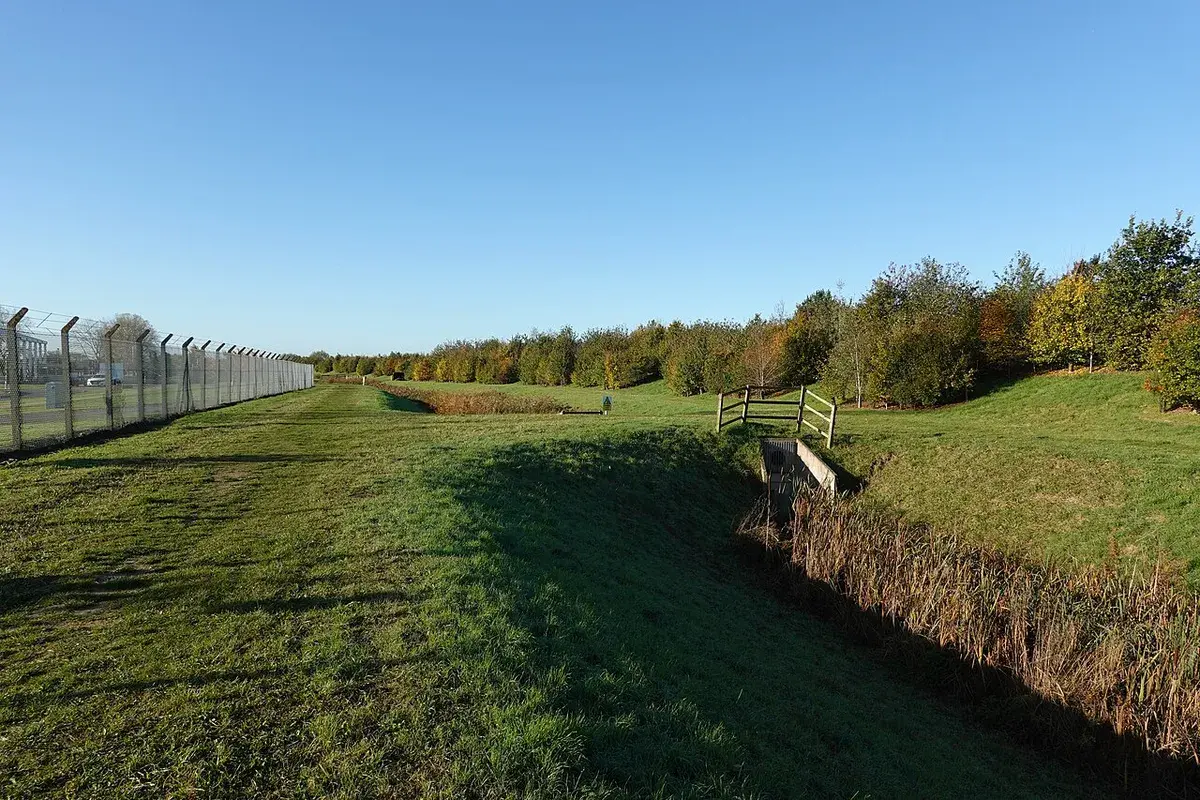
A swale is a broad, shallow channel graded into the lawn that collects water from the slope beside it and carries it along the lot to an outlet. Getting the grade away from the house is half the job; the swale decides where that water goes next.
Good residential swales are wide and gentle rather than deep, so a mower crosses them and grass holds the bottom. A narrow, steep channel in red clay concentrates the flow and starts cutting a gully within a few storms, which is an erosion problem rather than drainage. Every swale also needs a lawful place to end, covered on the yard drainage page, and on lots that slope toward a creek the county's buffer rules come into play, covered on the erosion control page.
How a Regrade Is Done
- Elevations are shot with a laser level from the foundation outward, and stakes mark the finished grade at intervals around the house.
- Mulch, rock and sod in the work zone are pulled back; downspouts are extended or tied into buried lines so they don't undo the new slope.
- Fill goes against the foundation first. A clay-rich soil compacted in thin layers sheds water; loose sandy topsoil lets it soak straight through to the wall.
- The slope is shaped out to the 10 foot mark and blended into the swale, with a few inches of topsoil on top for the grass.
- Finished soil stays below the siding and weep screed rather than burying them, which can mean lowering ground farther out instead of raising it at the wall.
- Sod or seed with straw goes down the same day so the first heavy rain doesn't wash the new grade into the street.
The best test comes afterward: walk the yard during the first hard rain and watch where the water goes. Sheets of water moving steadily away from the house and down the swale mean the grade is right; puddles against a wall mean a low spot was missed.