Why Downspout Drainage Comes First
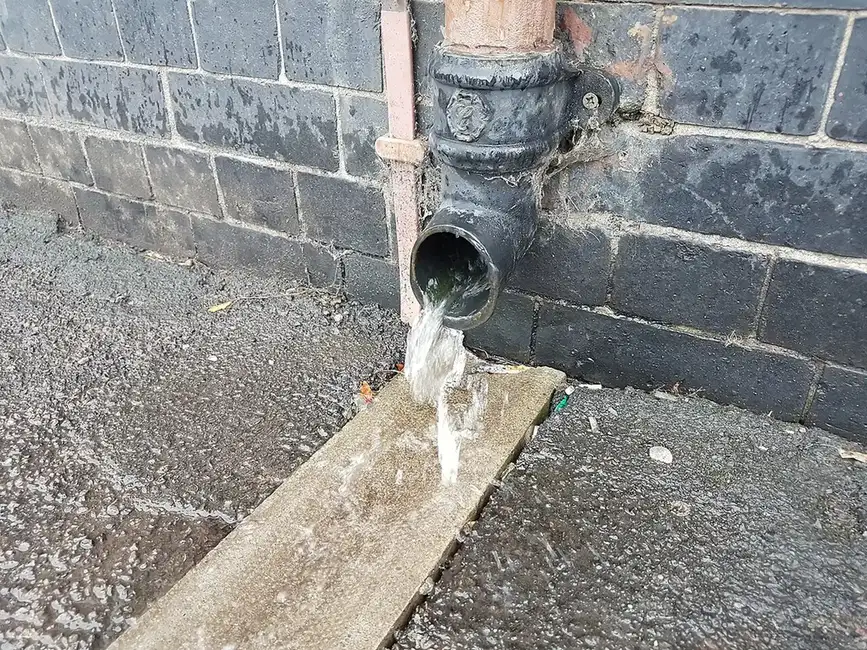
Underground downspout drainage connects each gutter downspout to a buried solid pipe that carries roof water out to a pop-up emitter, a daylight outlet or a catch basin, well clear of the house. On many McDonough homes it's the cheapest drainage fix there is, and it should come before anyone prices a french drain for a wet crawl space or a soggy side yard.
The volume is bigger than most people guess. One inch of rain on 1,000 square feet of roof produces about 623 gallons, and the gutters funnel all of it into a handful of downspouts. A typical elbow drops that water within a foot or two of the wall, right where builders backfilled loose soil against the foundation. Red clay below that loose fill takes water in slowly, so the roof runoff sits against the house.
Downspout Drainage Options and Prices
Simple buried downspout extensions usually cost about $150 to $350 each, according to Ware Landscaping's 2026 yard drainage cost guide. That covers a short trench, solid pipe and an emitter on open lawn. Longer runs add trenching labor and pipe, which runs about $3.50 to $6 per foot for 4-inch solid line in Metro Atlanta, per RW Lawn Co.
A rigid or flexible section clipped to the elbow that pushes water a few more feet out. It's the right stopgap for a rental or a test, but it gets kicked loose, crushed by mowers and moved by kids.
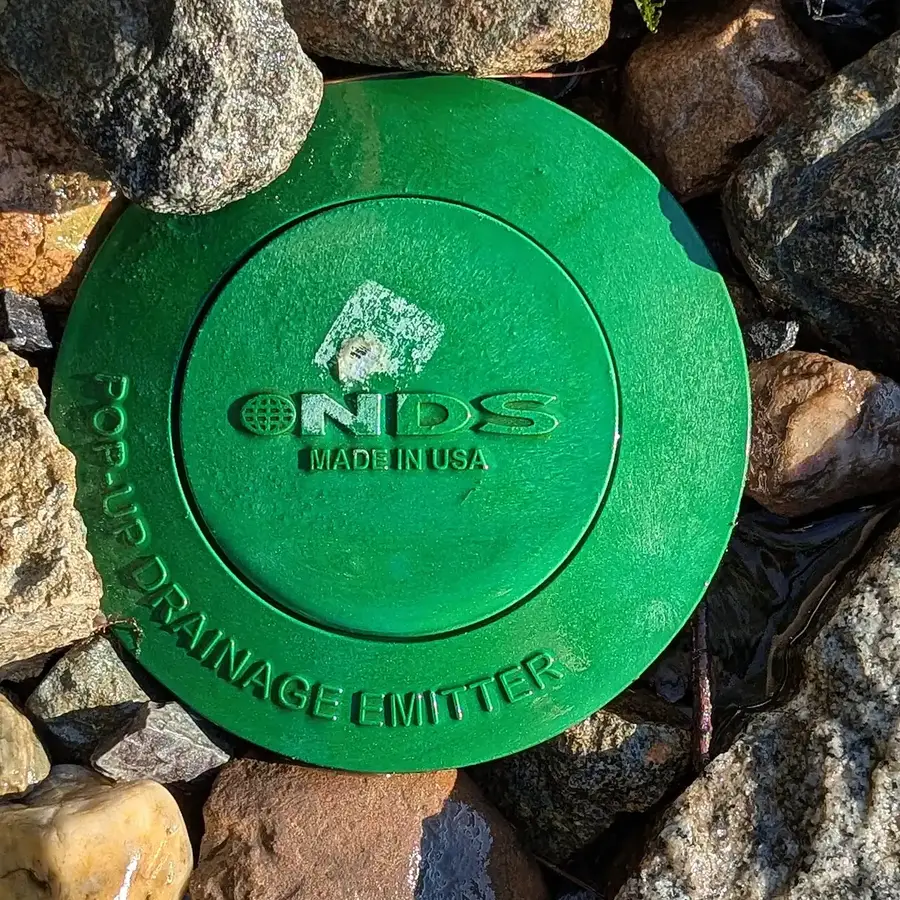
Solid pipe runs underground to a small green cap in the lawn. Water pressure lifts the cap to let the flow out, and it drops shut when the rain stops. This is the most common choice for open, gently sloped yards.
Where the lot falls off toward a swale, ditch line or wooded edge, the pipe can simply end there with a grate or rock pad. With no lid to lift, it releases water more freely than an emitter.
If a basin already serves a low spot, downspouts can feed into it so one outlet handles both. The basin and its pipe must be sized for the added roof water.
How Far Roof Water Should Go
Five feet from the foundation is the minimum in the International Residential Code where expansive or collapsible soils are known, unless the water goes into an approved drainage system. An ICC interpretation applies that rule to foundation walls, not slab-on-grade homes, but slab houses in Henry County still suffer when roof water pools at the edge of the slab.
Distance alone isn't the goal. The release point has to sit lower than the house, on ground that keeps falling away, and on your own lot. An emitter 20 feet out on flat ground can still send water creeping back toward the wall. If the yard tilts toward the house, regrading or a catch basin at the low spot may have to come first.
Why Buried Downspout Lines Fail
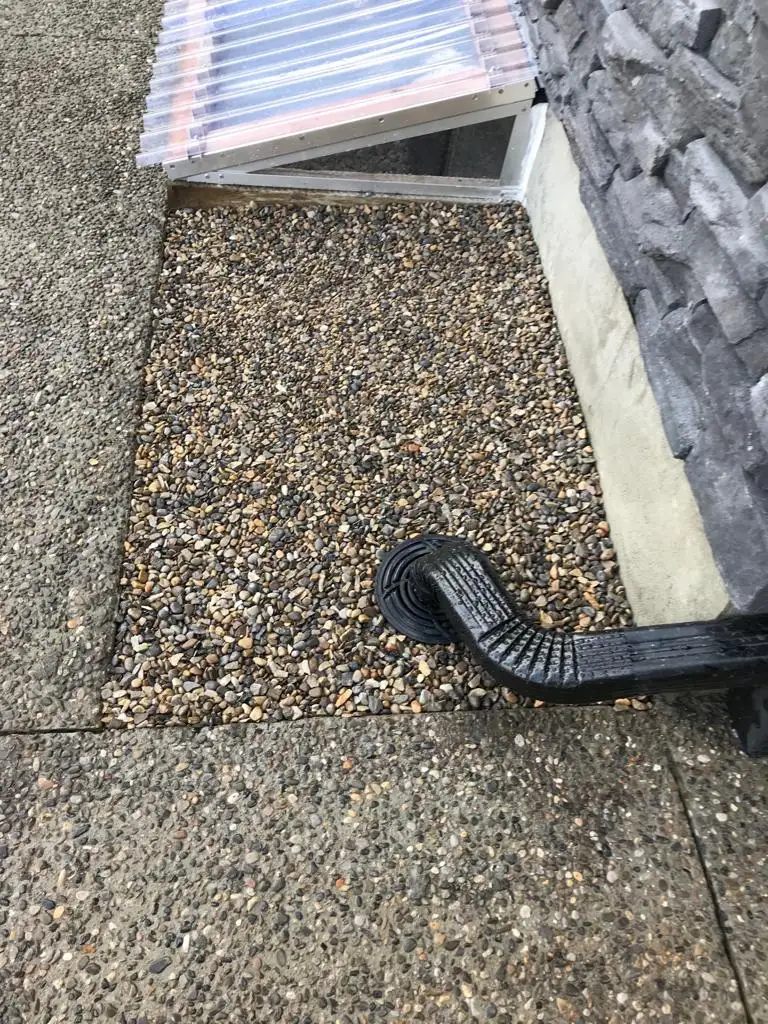
Most failed lines trace back to the pipe choice or the slope. Perforated pipe is the classic mistake: it leaks roof water back into the clay along the whole run, starting right beside the wall. Thin corrugated tubing is the other weak point, because its ridges catch grit and it sags between supports, leaving low spots that fill with silt.
Leaves cause the rest. Gutters under oak and pine canopy send a steady load of debris down the spout, so a filter or cleanout at the top of each line saves a lot of digging later. A line that backs up and overflows at the downspout during every storm is telling you it's blocked somewhere. Clearing it is covered in the FAQs below.
How an Underground Downspout Line Is Built
- Pick the outlet first. Walk the lot and find where the water can go: lower lawn, swale or an existing basin.
- Mark utilities. Call Georgia 811 and hand dig near marked lines.
- Trench with fall. Keep at least 1 percent slope, about 1/8 inch per foot, with no dips along the run.
- Lay smooth solid pipe. Glue or snap joints, add an adapter at the downspout and a cleanout where leaves will collect.
- Set the emitter or outlet. Bed it in gravel so the lid sits at lawn height and water can spread.
- Water test, then backfill. Run a hose down each spout and confirm flow at the end before closing the trench.