Why Jonesboro Yards Need French Drains and Drainage Fixes
Jonesboro sits on the Eastern Continental Divide. The railroad through town was laid along it, and there are no rail bridges for miles in either direction because no stream crosses the crest. Rain on one side runs to the Flint River and the Gulf of Mexico; rain on the other heads toward the Ocmulgee and the Atlantic. The Clayton County Water Authority describes the county as split almost in half between those two watersheds.
For a homeowner, the ridge decides how much water arrives from uphill. A lot near the crest mostly deals with its own roof and driveway. A lot on the flank catches everything above it, so the water shows up as a wet band across the backyard or a steady trickle against the foundation. That's classic french drain territory: a gravel trench with perforated pipe across the slope, catching the flow before it reaches the house.
The clay makes it worse. USDA maps much of the ground around Jonesboro as Gwinnett soils, a dark red clay that the series description calls firm, along with Cecil clay and graded "Urban land." Water moves through firm clay slowly, so it perches on top and drifts sideways with the slope, which is exactly the water a french drain is built to intercept.
Jonesboro French Drain Prices
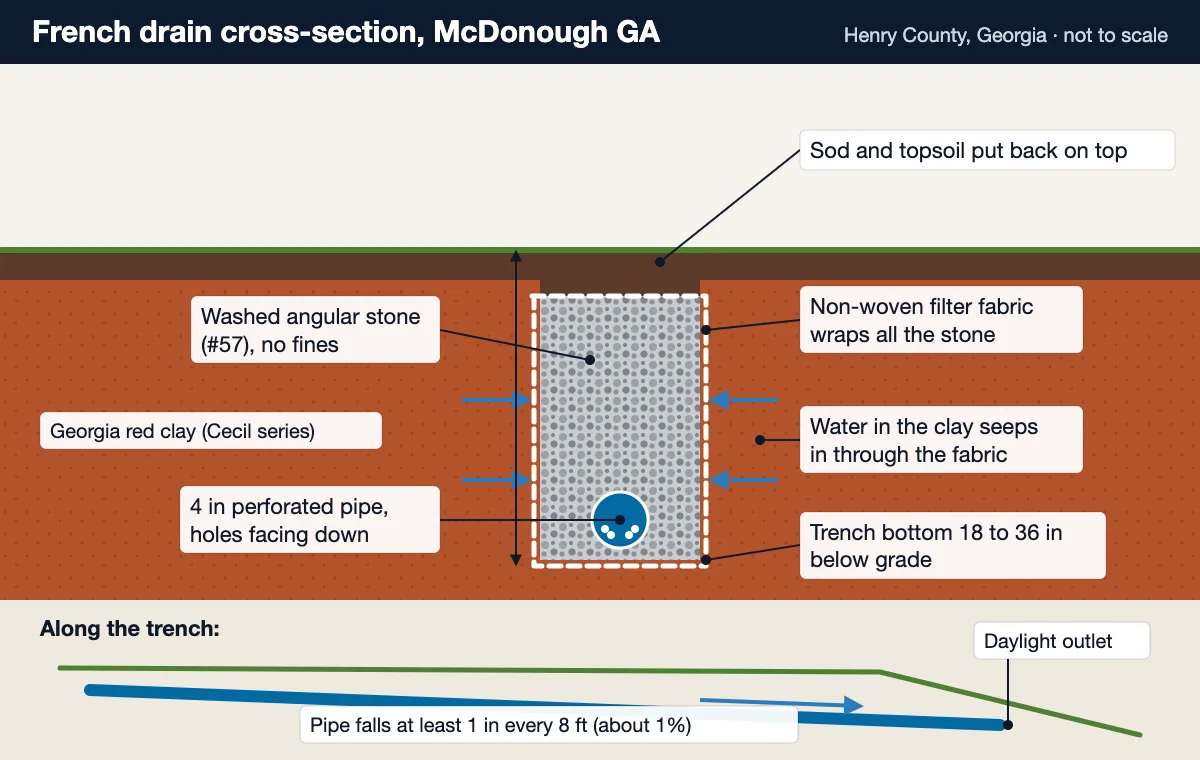
A Georgia contractor's published guide puts exterior french drains at $25 to $40 per linear foot and interior perimeter drains at $40 to $55. In Jonesboro the spread comes from three things: how far the pipe has to run to reach lower ground, how hard the clay digs, and how much finished landscape sits on the route. A short trench on a flank lot that daylights into a back slope can come in under $3,000; a long run across a level yard to a distant outlet is what pushes a job toward the top of the range.
The written quote should name the stone size, the fabric, the pipe and the outlet. In firm red clay, fabric is the line item people are tempted to skip, and it's the one that keeps fine clay from silting the stone shut within a few seasons.
Trees, Historic Homes and Jonesboro Permits
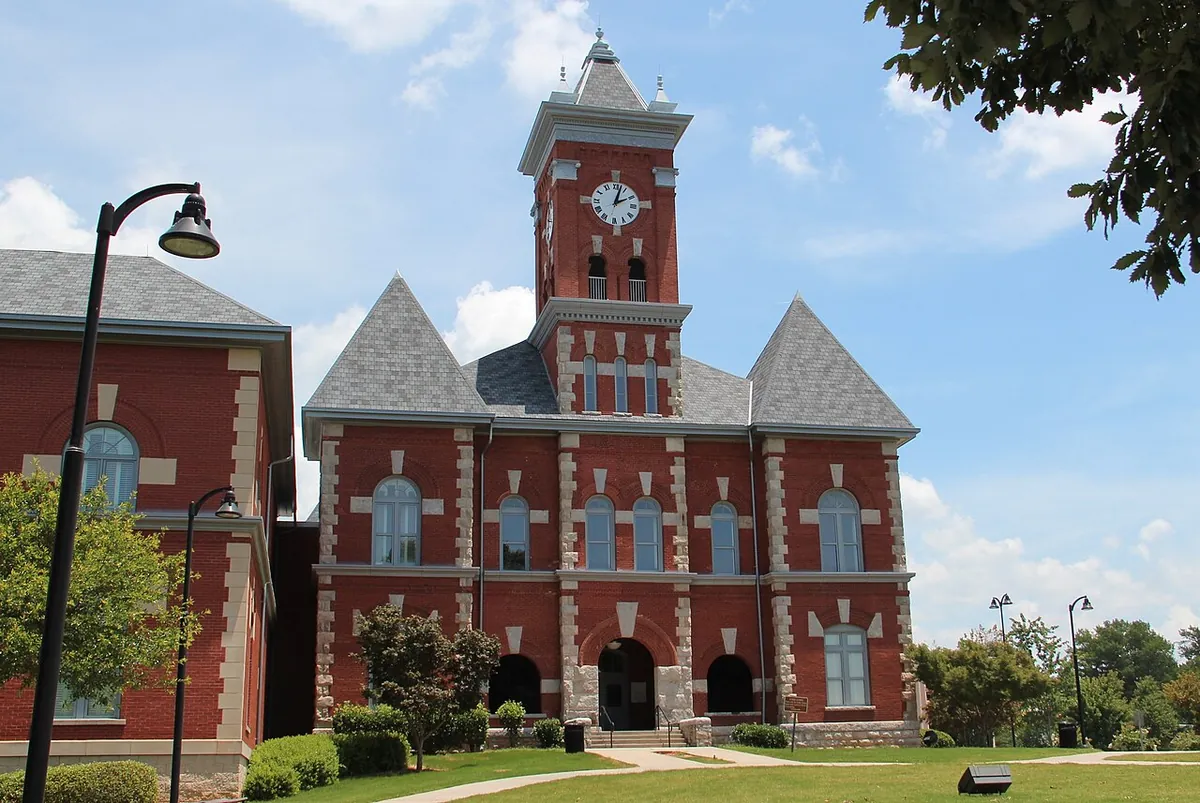
Jonesboro is old for metro Atlanta. It was founded as Leaksville in 1823, renamed in 1846 for railroad official Samuel Goode Jones, and incorporated in 1859; Stately Oaks and the site of the 1864 Battle of Jonesborough are both here. That history shows up in the permit process. The city's Community Development Department reviews tree removal permits under the Tree Protection Ordinance and prepares reports for the Historic Preservation Commission and the Design Review Commission.
For drainage work, two questions matter. Does the trench route take out a tree? If so, ask about a tree removal permit before anyone digs. Is the house in a historic district? Then ask whether anything visible from the street, like a new surface inlet or regraded front yard, needs design review. Buried pipe behind the house is usually the simplest path through both.