When a Driveway Needs a Trench Drain
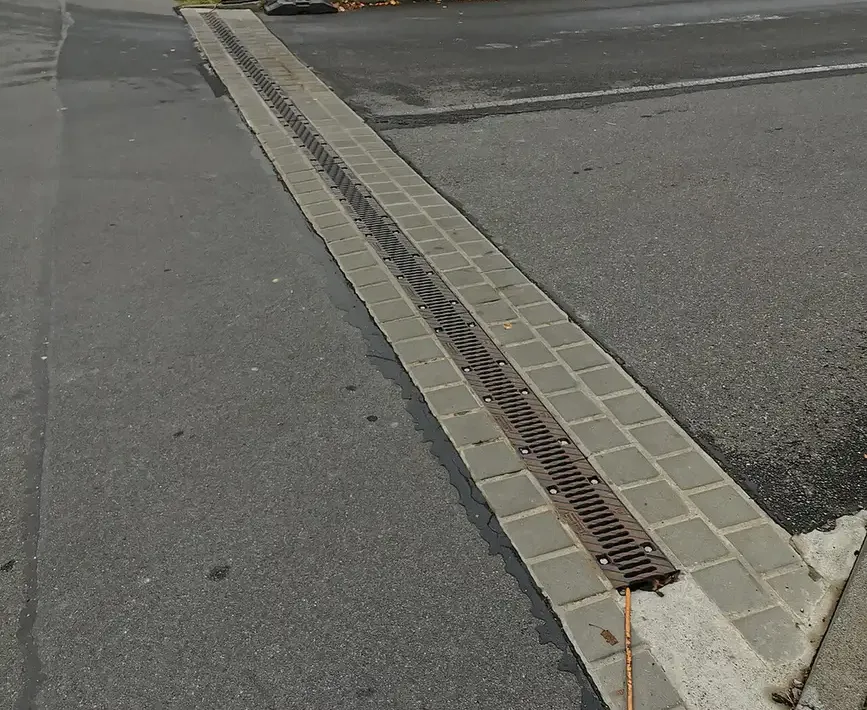
Trench drain installation puts a long, narrow channel with a grate across a paved surface so water flowing down it drops into the channel and gets piped away. In McDonough the most common case is a garage that sits at the bottom of a sloped driveway, where every storm pushes a sheet of water under the door.
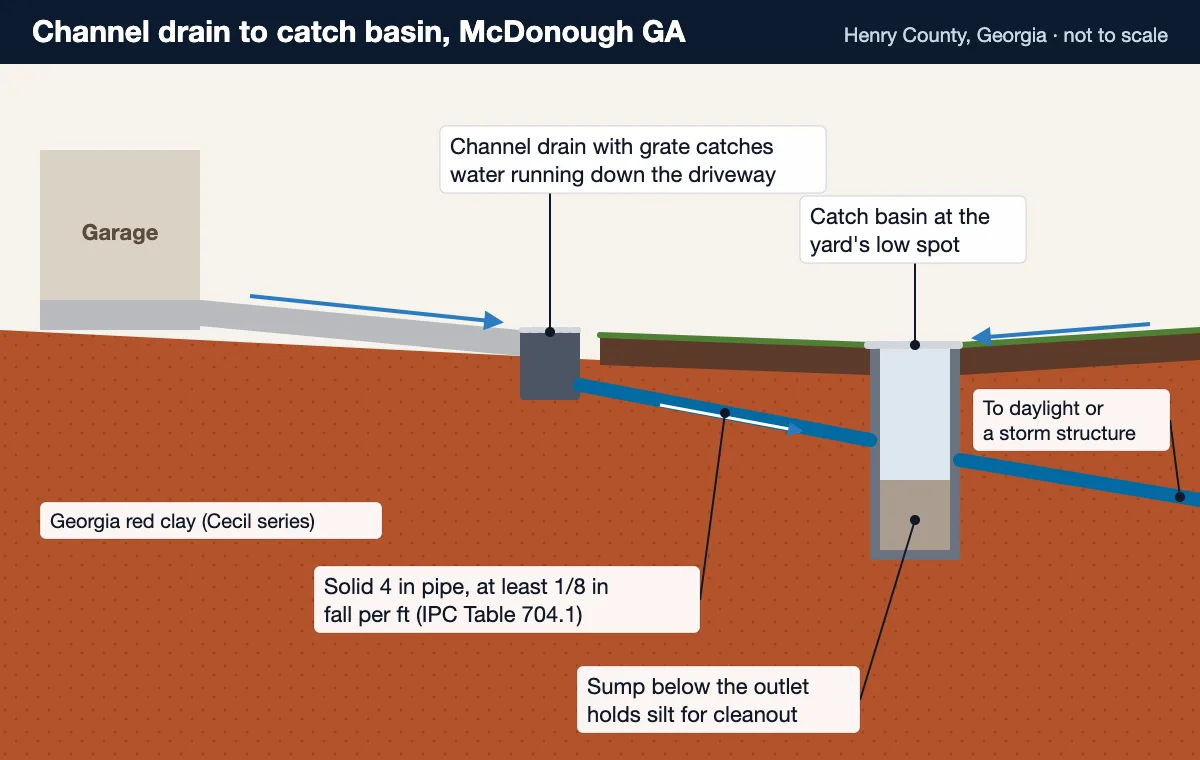
The key word is sheet. Water moving across concrete or asphalt spreads the full width of the surface, so a round grate in one spot catches only a slice of it. A channel set perpendicular to the flow intercepts the whole width. That's the job a trench drain does better than a catch basin, and it's why the two are often used together: the channel collects, the basin receives and sends it on.
Other spots that call for one: the edge of a patio that slopes toward the house, a walkway that funnels yard runoff to the front door, and the line where a neighbor's higher driveway sheds onto yours.
Trench Drain Installation Cost in McDonough
A residential driveway trench drain typically costs $400 to $2,500 installed, according to WSC Drainage's 2026 guide, which puts installed pricing at roughly $10 to $85 per linear foot. Channel material moves the number more than anything else, as the same guide's material-only prices show.
| Channel and grate type | Materials per linear foot |
|---|---|
| Plastic channel, plastic grate | $5 to $16 |
| Polymer concrete channel | $25 to $55 |
| Galvanized steel | $30 to $120 |
| Stainless steel | $50 to $160 and up |
Source: WSC Drainage, channel drain installation cost guide (2026). Labor drivers on a Henry County job are saw-cutting and breaking out existing concrete, the pipe run from the channel to a legal outlet, and whether a catch box is needed at the low end. Solid 4-inch pipe for that run costs about $3.50 to $6 per foot in Metro Atlanta, per RW Lawn Co.
Choosing a Grate That Survives a Car
A driveway grate should carry at least an EN 1433 Class B125 rating, the class meant for private cars and car parks. The European EN 1433 standard grades channel drains by the force each one is tested at in kilonewtons: A15 for pedestrian and bike areas, B125 for driveways and parking, C250 for curbside and road shoulder use. Many US drain makers publish their grates on that scale.
Cheap plastic grates sold for patios are often only A15. Under a car's tire they flex, crack and pop out of the channel, and a broken grate across a driveway is a tripping hazard. Spending more on the grate is better value than spending more on the channel, since the channel sits in concrete and the grate takes every hit.
How a Driveway Trench Drain Is Installed
- Plan the outlet. Decide where the channel empties and confirm the pipe can fall at least 1 percent from there to daylight or a basin.
- Locate utilities. Request Georgia 811 at least three business days ahead; service lines often cross near the garage.
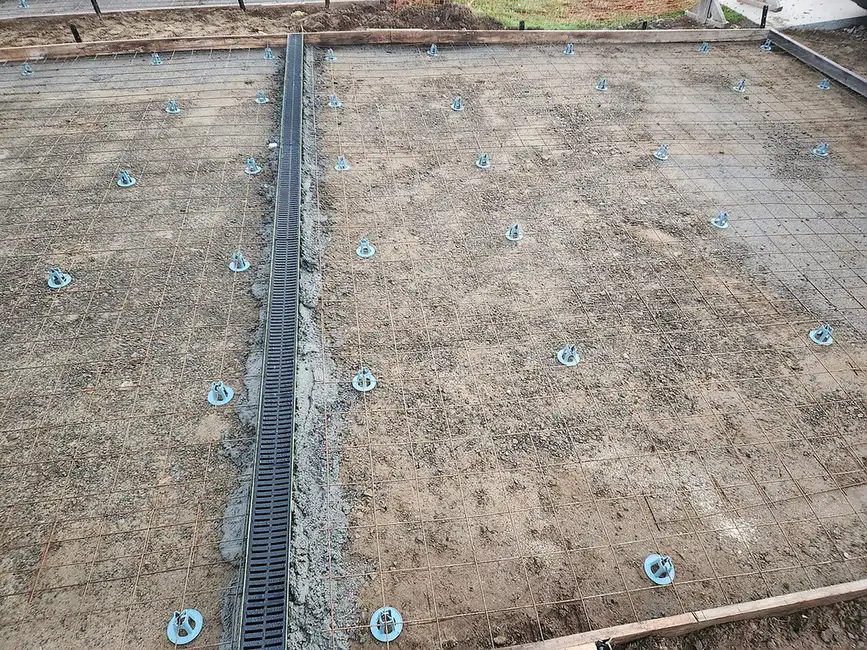
- Cut and excavate. Saw-cut the slab on two parallel lines, remove the strip, and dig deep enough for the channel plus a concrete bed below it.
- Set the channel. Join the sections, fit end caps and the outlet, and hold the top just under the finished surface so tires don't catch the edge.
- Pour the surround. Encase the channel in concrete, then finish flush with the old slab on both sides.
- Pipe and test. Run solid pipe to the outlet, flood the channel with a hose, and confirm water leaves before the grates go on.
On a new pour, the channel goes in with the slab, like the photo above. That costs far less than cutting in later, so anyone pouring a new driveway in Henry County should ask about adding one up front.