Erosion Control in McDonough for Residential Lots
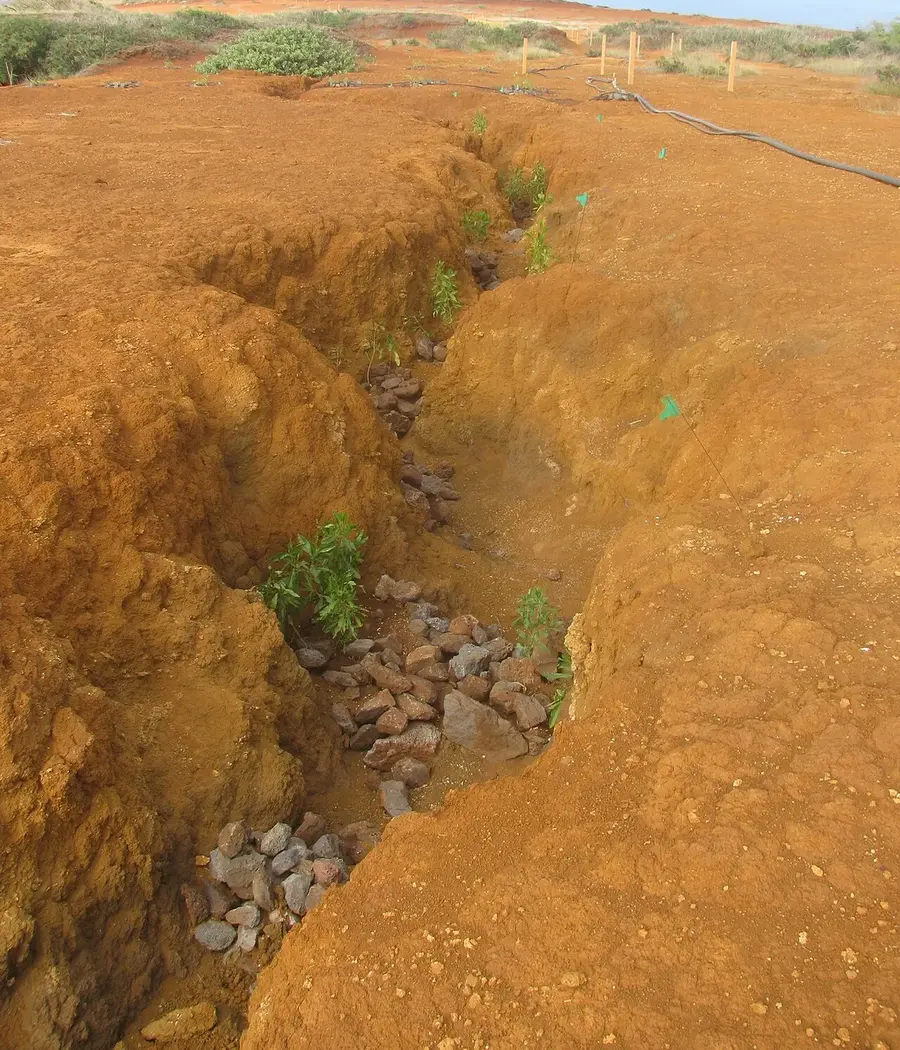
McDonough Drainage connects homeowners with a vetted local contractor for erosion control in McDonough and across Henry County: repairing the washouts, gullies and bare slopes that form wherever runoff concentrates on a lot, and building drainage swales so they don't come back. The approach is always the same: slow the water, spread it out, and cover the soil so rain can't carry it away.
Call about it when a channel is forming below a downspout or pipe outlet, red mud coats the driveway or street after storms, tree roots are showing on a slope, grass keeps failing on a bank, or the creek at the back of the lot runs orange after rain.
Why Henry County Lots Wash Out
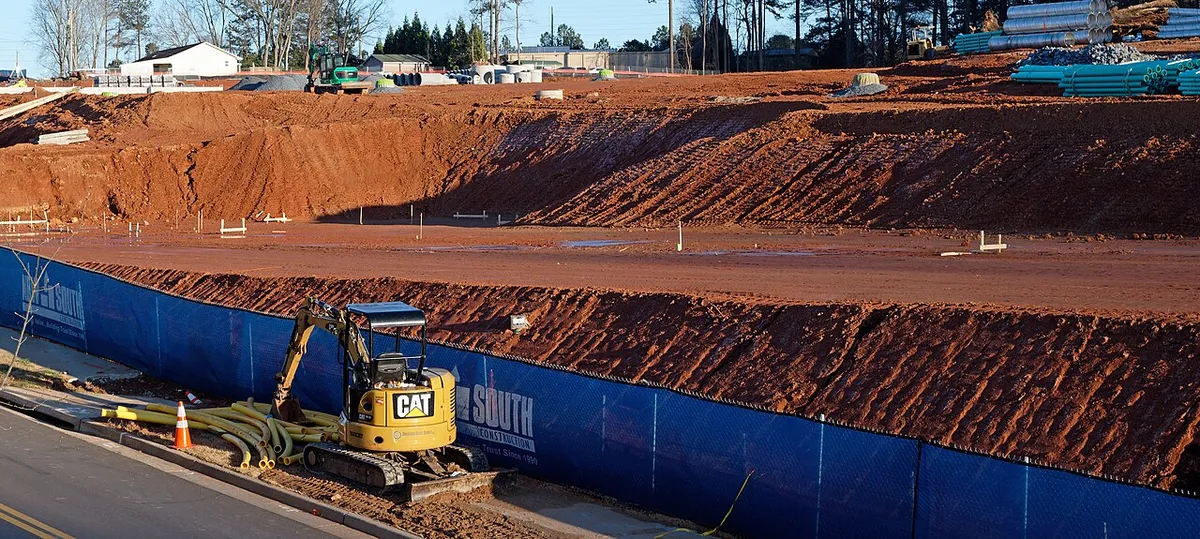
Henry County soil erodes because much of it is exposed clay subsoil that sheds water instead of absorbing it. USDA Agricultural Research Service work on the Piedmont describes an almost total loss of topsoil from old farm fields, leaving dense, high-clay layers at the surface. Many of today's subdivisions were built on exactly that ground.
Rain does the rest. Metro Atlanta averages roughly 52 inches a year, much of it in short, hard summer thunderstorms, and Cecil clay takes water in slowly. When a storm drops more than the ground can absorb, the excess runs off, collects in the low line of the yard and picks up speed and soil as it goes.
Development concentrates that runoff further. Roofs, driveways and patios turn a lot's worth of rain into a few streams leaving downspouts and pavement edges, and each of those streams is a gully waiting to start where it hits bare soil.
What Erosion Control Costs
Erosion repair on a residential lot is priced from its parts, and the two biggest parts are usually piping the water source and reshaping the ground. HomeGuide's 2026 figures put drainage trenching at $10 to $30 per linear foot and rough grading at $1 to $2 per square foot, before seed, blanket or rock.
What moves the total most is whether the cause gets fixed. Patching a gully without dealing with the downspout or driveway edge feeding it is cheaper on day one and costs more by the second summer. Access matters too: a slope that a small machine can reach is far cheaper to reshape than one that has to be worked by hand.
Erosion Control Methods That Work on Residential Lots
Downspouts and catch basins that dump onto a slope get tied into buried solid pipe that runs to a stable outlet. The outlet ends on a rock apron so the water spreads out before it touches soil.
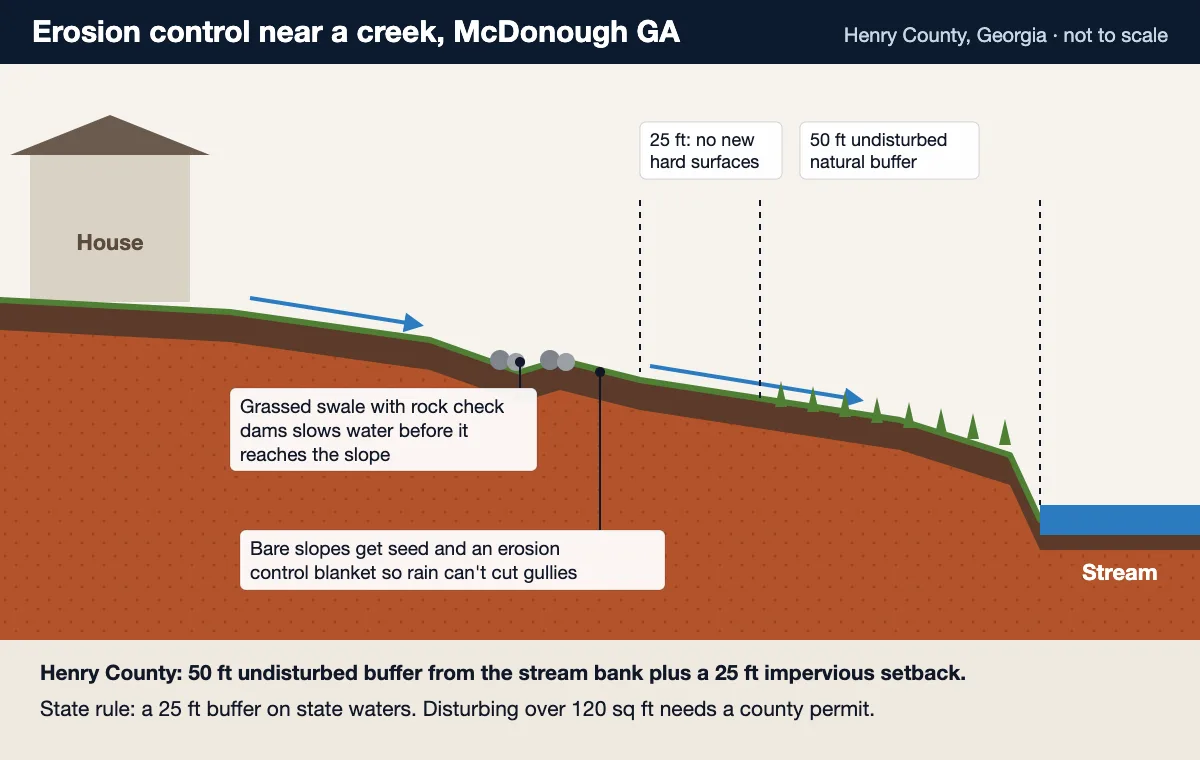
A broad, gently sloped swale collects sheet flow and walks it across the lot at low speed. Grass in the bottom is what keeps the swale itself from eroding.
Low rock barriers spaced along a swale or a repaired gully break the water's speed into a series of short drops and catch sediment behind each one.
Biodegradable straw or coconut-fiber mats pinned over seeded slopes hold soil and seed in place until roots take over, then break down.
Once the water is redirected, the gully is filled with soil compacted in layers and covered, with rock lining any stretch where flow will still concentrate.
Banks too steep to hold grass are broken into terraces or held with a retaining wall, which then needs its own drainage, covered on the retaining wall drainage page.
Henry County Rules: Land Disturbance and Stream Buffers
Henry County requires a residential land disturbance permit for any clearing, grading or leveling over 120 square feet, so most erosion repairs need one. The application runs through the county's SagesGov permitting portal, and the Environmental Inspections & Compliance division handles erosion and sediment questions.
Lots that drain to a creek carry a second set of limits. Henry County's development code requires a 50 foot undisturbed natural vegetative buffer on both banks of a stream, measured from the top of the bank, plus a further 25 foot setback where impervious cover is prohibited. Georgia's Erosion and Sedimentation Act separately protects a 25 foot buffer along state waters.
Inside the state buffer, homeowners can thin or trim vegetation while leaving a natural canopy, but significant land disturbance needs a variance, according to the Georgia Department of Community Affairs. In practice, erosion fixes near a creek are designed to stop the water before it reaches the buffer rather than working inside it.
How an Erosion Repair Is Done
- The lot is walked during or right after rain where possible, tracing each erosion channel back to the roof, pavement or neighbor's slope feeding it.
- Stream banks and buffer lines are located before any design, so the repair stays out of protected ground.
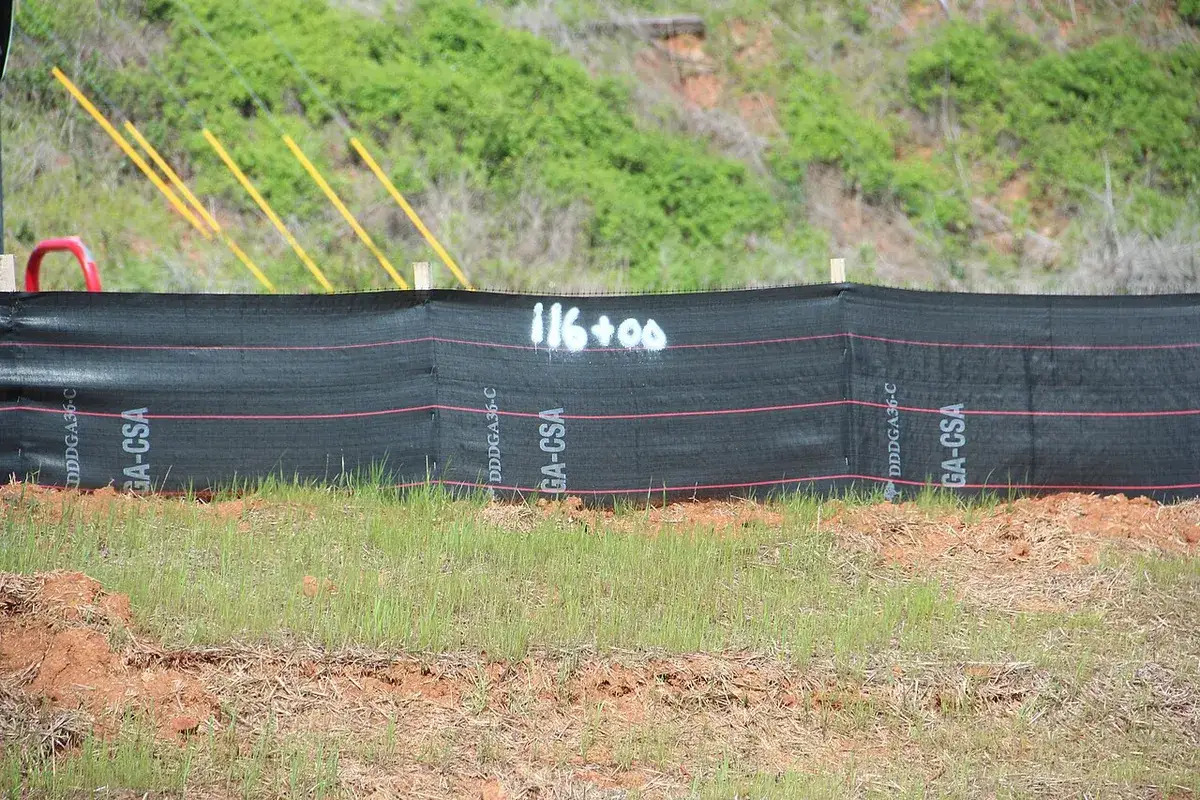
- Temporary silt fence or straw wattles go in below the work area to keep loosened soil on the lot.
- Water sources are piped or redirected first, then gullies are filled in compacted layers and slopes reshaped to a gentler profile.
- Swales are graded and lined, with rock check dams where the fall is steepest.
- Every bare surface is seeded and covered the same day, with blankets pinned on slopes and straw on flatter ground.