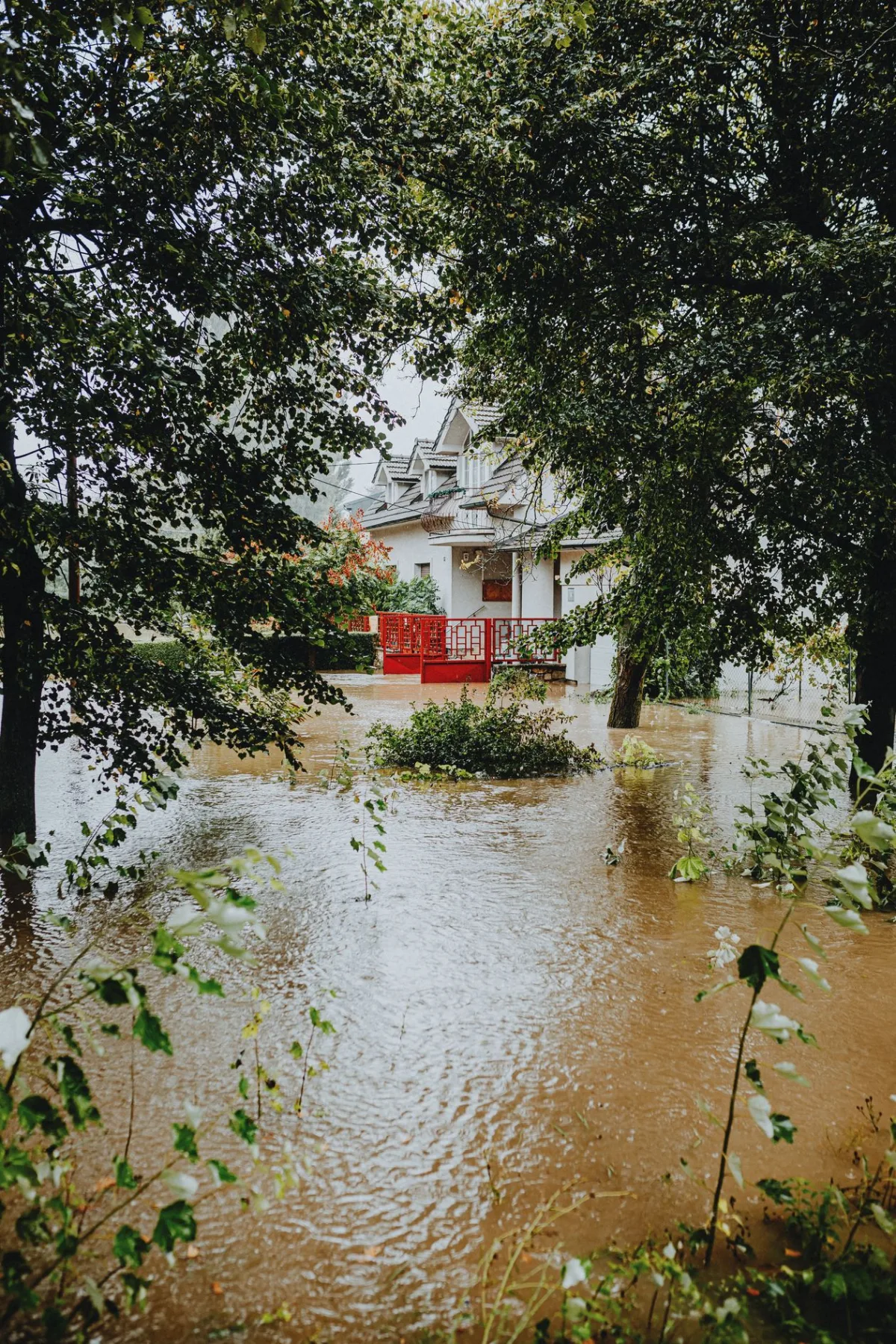
Standing Water in Henry County Yards
Yard drainage problems in McDonough almost always trace back to the same two causes: Cecil red clay soil and new construction grading. Georgia's Piedmont clay has hydraulic conductivity so low that heavy summer thunderstorms overwhelm it. Water pools on the surface, takes days to drain, and repeatedly saturates low areas of the yard through the wet season.
New-construction homes in Henry County compound this problem. With nearly 7,000 homes being built in the county each year, builder grading is often rushed. Final grades that looked correct at completion can direct water toward foundations once soil settles and lawn establishes. McDonough homeowners frequently discover these issues one to three years after move-in.
Surface yard drainage solutions intercept, collect, and redirect water before it saturates soil or reaches the structure. The right system depends on where water enters, how much volume you deal with, and where it can safely exit.
Yard Drainage Systems for McDonough Lots
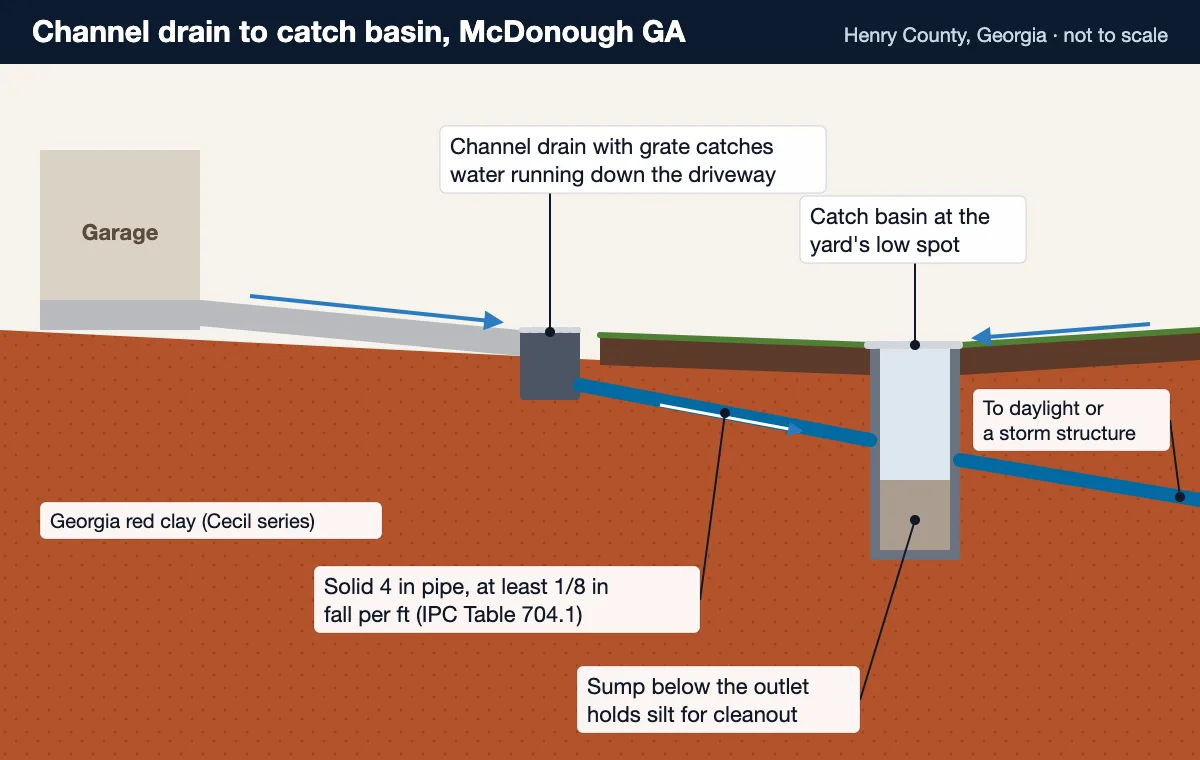
Grated collection boxes set at low points in the yard. They capture surface water and route it underground to a safe outlet. Effective for low spots that collect runoff from multiple directions. Catch basins work well in McDonough yards where the problem area has defined edges.
Linear trench drains across driveways, patios, or property edges where sheet flow enters the yard. Channel drains intercept water in a line rather than a point, making them ideal for water that sheets across hard surfaces during Georgia rain events.
Subsurface perforated pipe in crushed stone to intercept groundwater and lateral water movement through Georgia clay. When yard saturation is coming from subsurface sources or from uphill neighbor runoff, a french drain addresses the source rather than just the symptom.
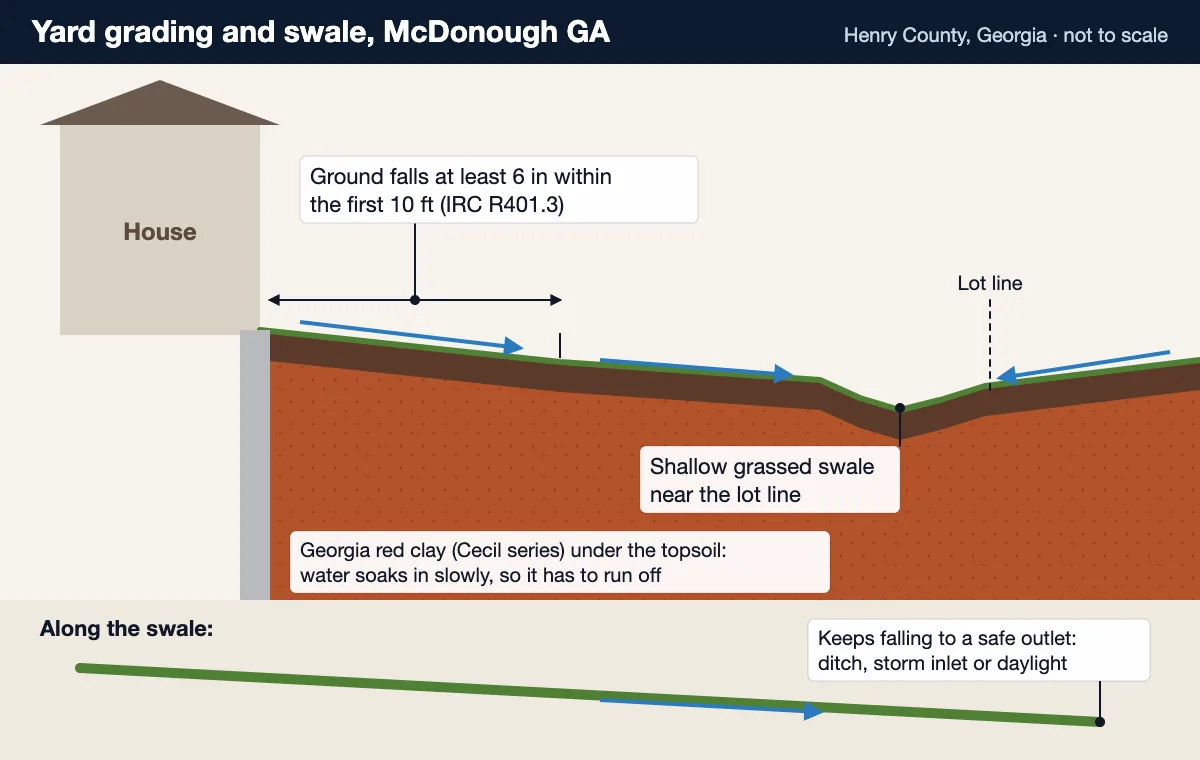
Re-grading low areas to create positive drainage toward a collection point or outlet. In many McDonough yards, minor re-grading can redirect sheet flow so it moves away from the home rather than toward it. The site visit settles whether grading alone solves the problem or whether a drainage system is also needed.
Underground stone-filled pits that temporarily store collected water and allow it to slowly percolate into surrounding soil. Best used in areas of Henry County where soil permeability below the clay horizon allows for acceptable drainage rates and where there is no better outlet available.
What to Expect During Installation
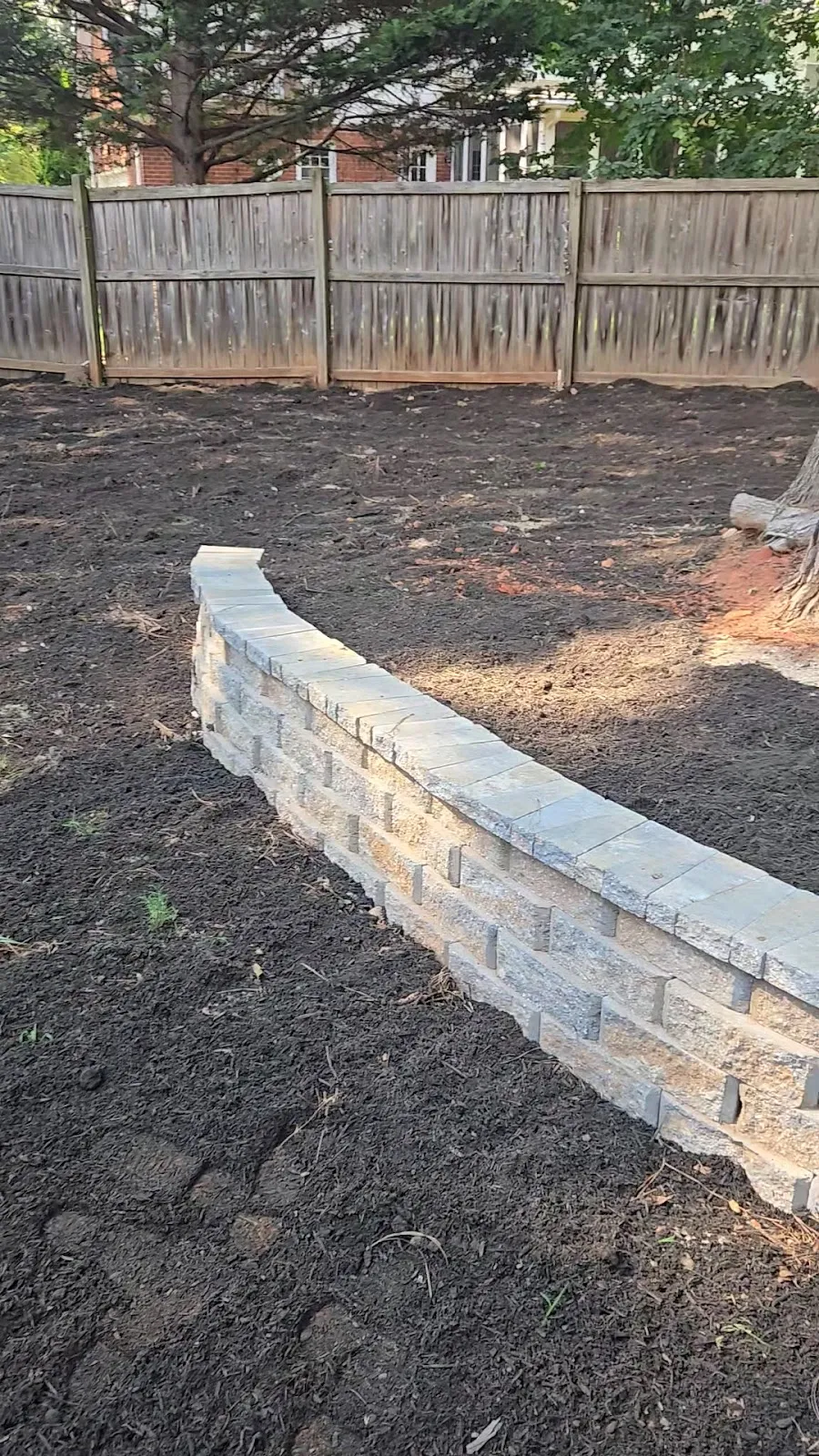
Recent project from our featured contractor
Finish grading behind a new block retaining wall, from our featured contractor's own job photos.
The photo shows fresh soil spread evenly across the yard behind a curved, capped block wall.
Getting the slope right across a yard is what keeps water moving away from the house instead of pooling against it.
Chris E. hired him to grade for an arena at their farm and wrote that [our contractor] “listened to what I wanted and absolutely delivered with great work.”
Most yard drainage installations in McDonough residential properties are completed in one day. The site is assessed, the outlet confirmed, the collection system installed and the disturbed area restored. In Georgia red clay soils, any stone-filled system needs geotextile filter fabric around it to prevent clay migration that would clog the drainage over time.
Henry County requires a land disturbance permit for grading and excavation over 120 square feet. Permit requirements should be confirmed before any digging starts. See the Henry County Environmental Inspections department for permit details.
Choosing Between a Catch Basin, a Channel Drain, and Regrading
Most McDonough homeowners call about a symptom, which is a wet patch of lawn. The fix depends entirely on how water arrives at that patch. If water collects at a defined low point from several directions, a catch basin set at the bottom of that depression is the cheapest system that will actually work. If water arrives as a sheet moving across a driveway, a patio, or a lot line, a point inlet will not catch it and you need a channel drain running perpendicular to the flow. Putting a catch basin in front of sheet flow is the most common wasted spend on Henry County properties.
If the wet area is high enough that water can be persuaded to run somewhere else, regrading a shallow swale is usually the right answer and it costs less than any piped system. Cecil clay actually helps here: it holds a graded shape well and does not slump the way sandy soils do. The limit is fall. A swale needs somewhere downhill to go, and on the flatter lots east of town toward Ola there frequently is not enough drop across the property to make gravity do the work.
If the yard is soggy between storms rather than only after them, the water is subsurface and no amount of surface collection will fix it. That is a french drain problem. The check is to walk the wet zone two or three days after the last rain. Ground that is still soft when the rest of the yard has firmed up is being fed from below or laterally, usually by an uphill lot.
What Yard Drainage Costs in McDonough and Henry County
A single catch basin with a short underground run to a daylight outlet usually falls between $900 and $2,000 installed, depending on how far the pipe has to travel and whether it crosses a driveway. Multi-inlet systems that pick up a driveway, a patio, and a low spot in the lawn are quoted on the same basis as exterior french drain pipe, roughly $25 to $40 per linear foot in Henry County, which puts most of those projects in the $3,500 to $8,000 range. Swale regrading alone, where the lot allows it, comes in below all of that.
The variable that moves the price most is not the size of the wet area. It is the distance to a legal outlet. Two identical soggy patches, one 30 feet from a downhill daylight point and one 140 feet from the nearest place the water can legally go, are not the same job and will not be the same number. That is why yard drainage is not quoted over the phone.
Trenching in Cecil clay also runs slower than the national cost tables assume. Red clay is dense, it loads heavy, and it does not break apart cleanly when wet. Budget figures pulled from a general contractor pricing guide tend to come in low for Henry County for exactly that reason.
Where Yard Water Can Legally Go in Henry County
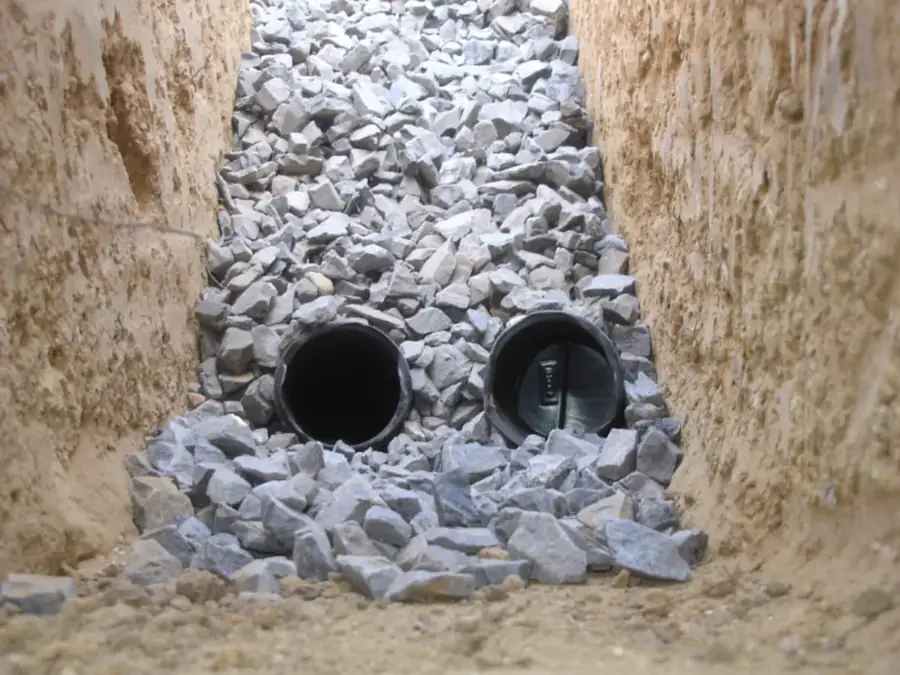
Collecting water is the easy half. Getting rid of it legally is the half that decides whether a system works. In Henry County there are three defensible outlets: a daylight point on your own property below the collection area, a tie-in to an existing storm structure where the county or the city allows it, and a dry well sized to hold the peak volume where the soil below the clay horizon will actually accept it.
What is not an outlet is your neighbor's lot. Concentrating runoff and discharging it across a property line creates civil liability in Georgia, and in a county that requires a land disturbance permit for anything over 120 square feet it can create a code problem as well. Where a McDonough lot genuinely has nowhere downhill to send water, the honest answer is often a combination of storage and a pump rather than a gravity system, and a straight estimate will say so.
Public drainage capacity is a live issue here. The City of McDonough has its Blacksville Community Drainage Improvements project underway, which tells you the municipality itself treats stormwater conveyance as infrastructure worth budgeting for. On a residential lot the same logic applies at smaller scale: the system is only as good as the place the water ends up.
Common Patterns Across Henry County Yards
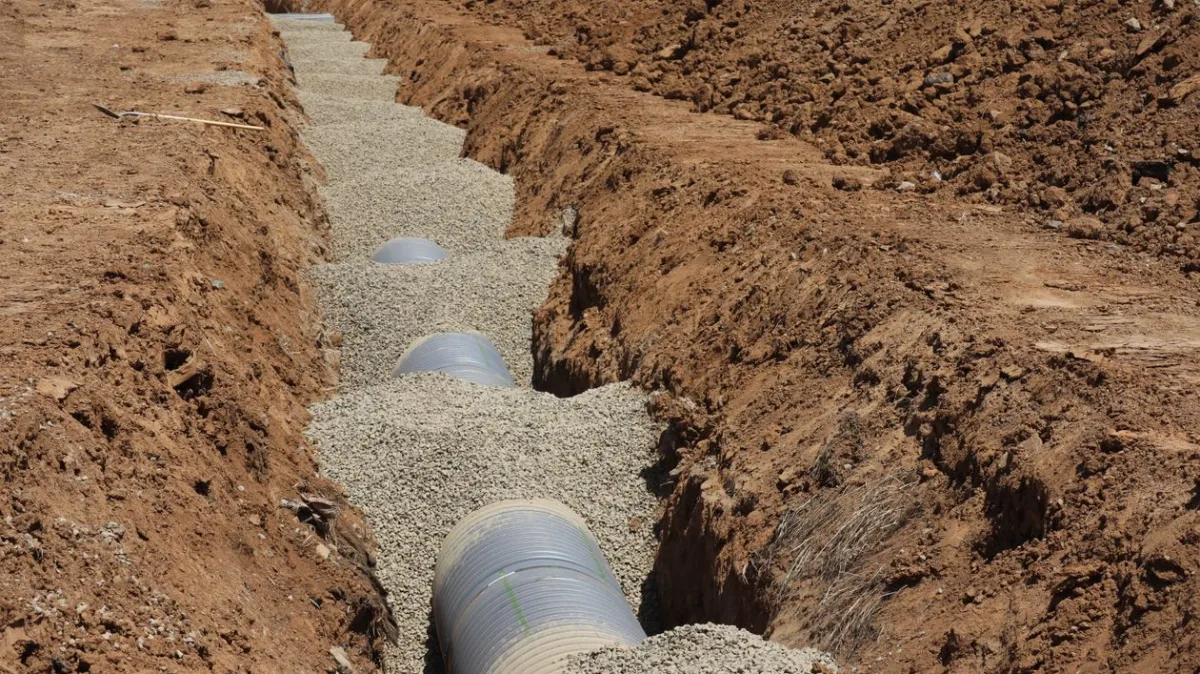
Newer subdivisions in McDonough, Stockbridge, and Hampton produce a distinct failure: the lot was cut and filled to make a level building pad, and the fill settles over the first few seasons into a shallow bowl along one side of the house. Henry County adds close to 7,000 homes a year, so there is a continuous supply of properties entering years one through three where this shows up for the first time.
Older in-town McDonough properties fail differently. Mature trees, decades of mulch and topsoil added around beds, and driveways replaced at a higher elevation than the original all conspire to trap water against the house. On those lots the fix is often smaller than the homeowner expects: a channel drain at the garage apron and two downspout extensions can resolve what looked like a full-yard problem.
Larger lots toward Ola and Locust Grove bring a third pattern, which is volume rather than grade. An acre or more of Cecil clay sheds an enormous amount of water during a July storm, and the runoff concentrates into defined channels before it ever reaches the house. Those properties usually need interception partway up the slope rather than collection at the bottom, because by the time the water reaches the low corner there is too much of it for any single basin to take.