Will a Dry Well Work on Your Lot?
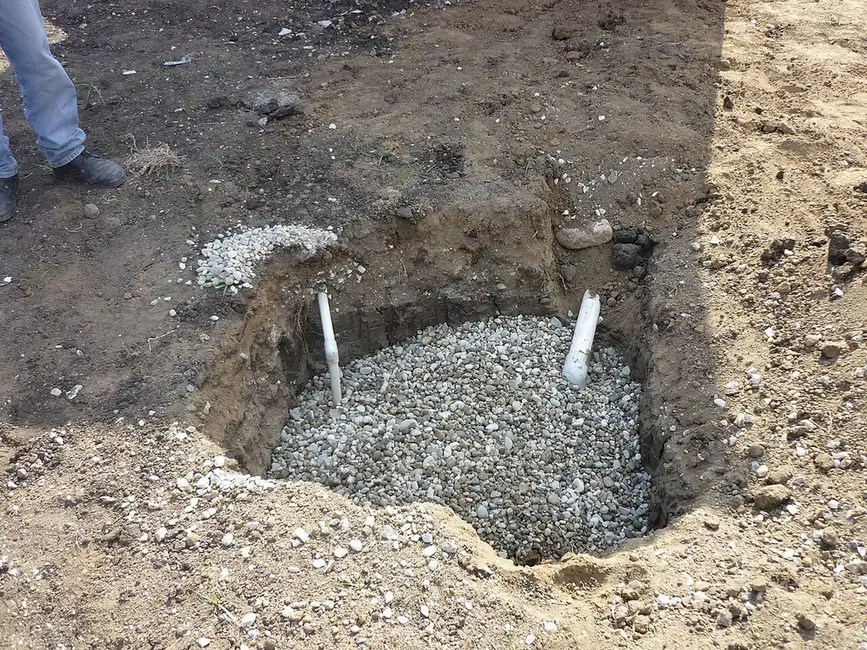
Dry well installation in McDonough only makes sense after a test hole shows the soil at the planned depth actually absorbs water, because in Henry County's red clay it often doesn't. A dry well is a buried stone pit or perforated chamber that receives water from a downspout or yard drain and releases it into the surrounding ground. If that ground is tight clay, the pit fills during the first storm and stays full for days.
It's the outlet people reach for when the lot has nowhere downhill to send water. That situation is real on flat lots east of town and on pads cut level for new subdivisions. A dry well can be the right answer there, but only with proof from the soil, not from a product brochure written for sandy ground.
Why Cecil Red Clay Defeats Most Dry Wells
The problem is the clay layer that sits right where a dry well would go. USDA's official description of the Cecil series, the dominant upland soil around McDonough, lists red clay subsoil from about 8 inches down to 42 inches, and that clay layer runs 24 to 50 inches thick. It's described as firm, sticky and plastic.
Georgia's own stormwater design guidance sets the bar for anything that relies on soaking water into the ground. The Georgia Stormwater Management Manual expects an infiltration rate of at least 0.5 inches per hour, soil with less than 20 percent clay and less than 40 percent silt and clay combined, and no placement in fill soils or on slopes steeper than 6 percent. A pit dug entirely in Cecil clay misses most of those marks.
Fill is the other trap. New Henry County lots are often cut and filled to make a flat building pad, and the manual rules out infiltration in fill. A dry well in the back yard of a two-year-old house may be sitting in compacted, mixed material that drains even worse than native clay.
Dry Well Installation Cost
Installed dry wells typically cost about $1,334 to $5,139, the national range Ware Landscaping cites in its 2026 drainage cost guide. A simple gravel-filled pit fed by one downspout sits near the bottom of that range. Precast concrete rings or stacked plastic chambers sized for a large roof, with a long inlet pipe, sit near the top.
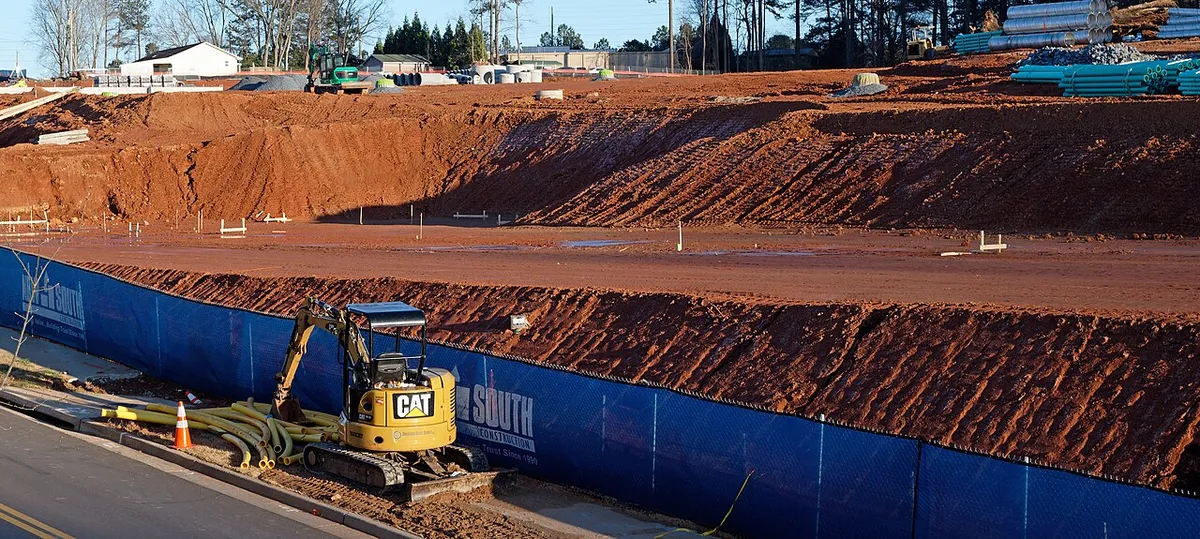
In McDonough the local drivers are depth and testing. Getting below a thick clay layer means a deeper, wider hole and more spoil to haul. The test hole itself is a separate small cost, and it's money well spent, because it decides whether the larger spend is worth making at all. Henry County's land disturbance permit applies past 120 square feet of digging and grading, so a big pit with a long trench can cross that line.
Better Outlets to Rule Out First
A daylight outlet beats a dry well whenever one is reachable, even 150 feet away, because gravity never fills up. After that, in rough order:
- Pop-up emitter: releases water over open lawn that falls away from the house. See underground downspout drainage.
- Storm structure tie-in: only where the city or county agrees to the connection.
- Regrading: a shallow swale can move water to a corner that does have an outlet.
- Sump and pump: lifts water from a low point to somewhere it can drain, at the cost of power and upkeep.
How a Dry Well Is Built When the Soil Passes
- Test the soil. Dig and time a test hole at the planned depth, ideally after a wet spell.
- Site it away from the house. Keep it well clear of the foundation, the septic field and property lines, on ground that slopes away.
- Locate utilities. Georgia 811 needs at least three business days' notice before digging.
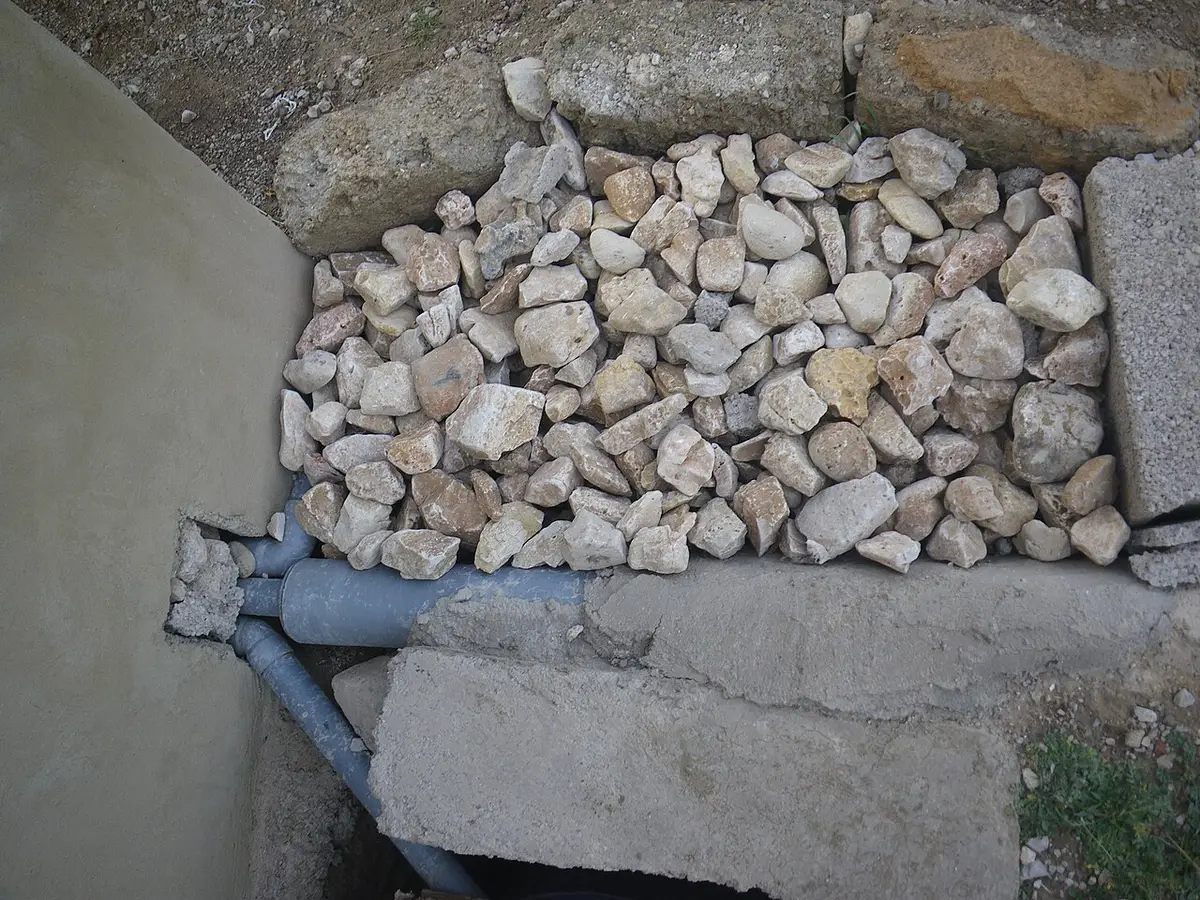
- Dig and line. Excavate the pit, line the walls with non-woven filter fabric, and set the chamber or fill with clean washed stone.
- Pipe in with solid line. Feed it with solid pipe at a steady fall, with a leaf filter at the downspout.
- Add an overflow. Fit a pop-up emitter or surface outlet so a long storm has somewhere to go when the pit is full.
- Cap and restore. Fold the fabric over the top, cover with soil and sod, and mark the location for future cleaning.